
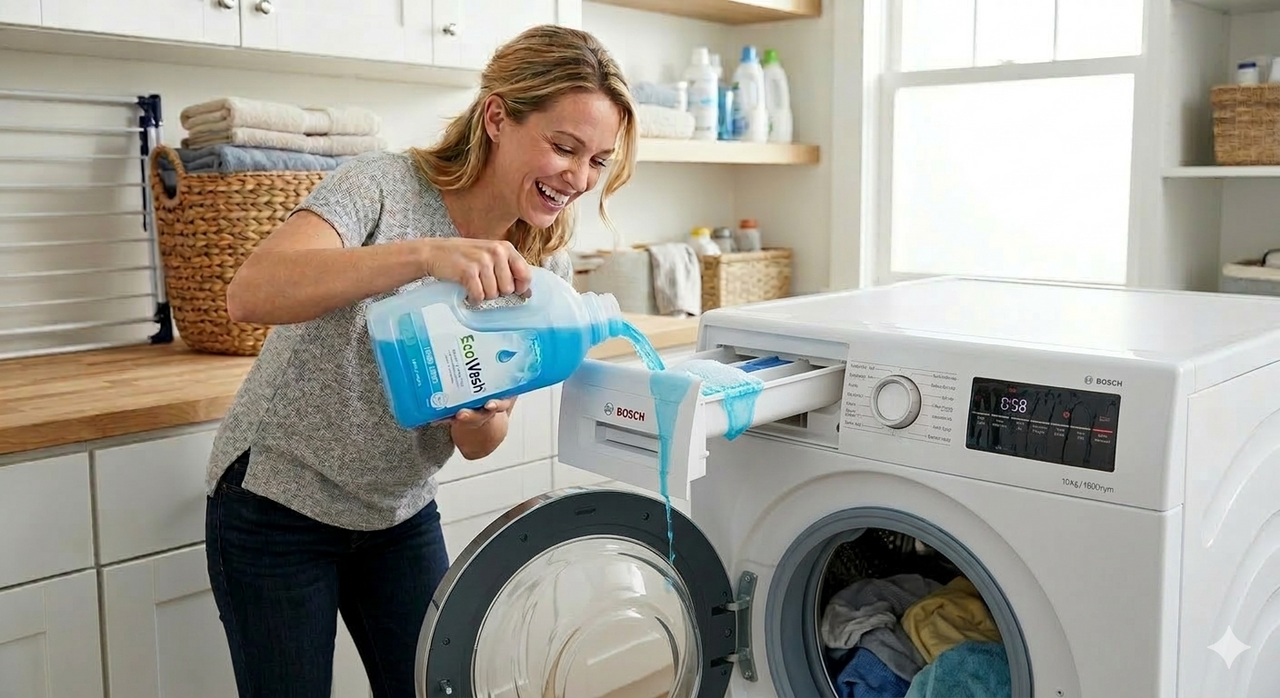
Are You Using Enough Detergent for Cloth Diapers?
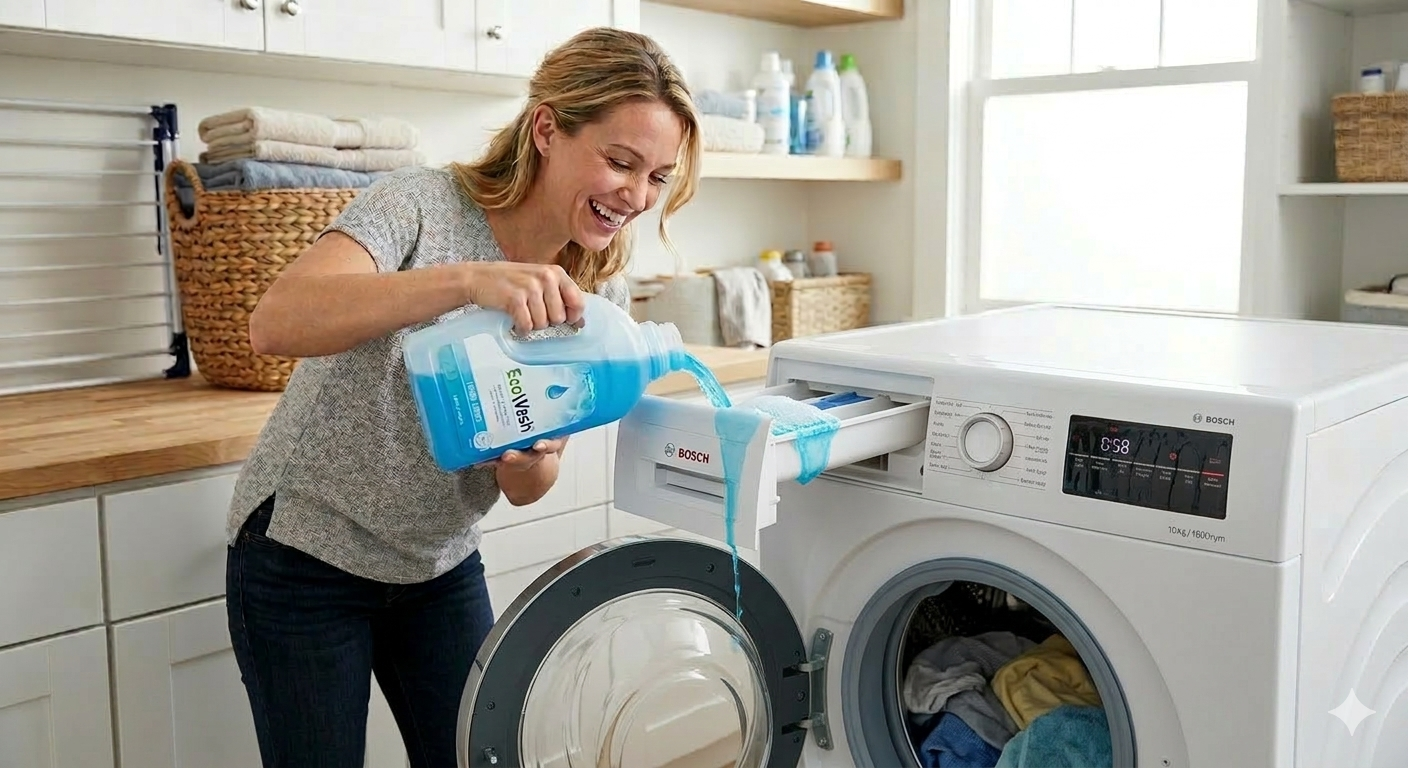
Quick Answer: Cloth diapers typically need a small amount of detergent in the pre-wash and the full amount recommended for heavily soiled laundry in the main wash. Using too little detergent is a common cause of odor, buildup, and reduced absorbency.
Many people run into a frustrating issue when washing cloth diapers: the diapers look clean when they come out of the washer, but develop odor later or smell unpleasant when wet.
In most cases, this is not caused by using too much detergent, but by using too little. If you're unsure how all parts of the wash process work together, start with our guide on how to wash cloth diapers properly, which explains the most common mistake that leads to buildup and odor.
Cloth diapers and reusable incontinence products are heavily soiled laundry. They require enough detergent to fully remove urine salts, body oils, and bacteria from absorbent fibers.
A proper cloth diaper washing routine depends on three key factors:
- agitation
- detergent
- water temperature
Related washing guides:
Warm vs Hot Water: What Actually Cleans Cloth Diapers Best?
Why Do Cloth Diapers Start to Smell? (And How to Fix It)
The Science Behind Washing Cloth Diapers Properly
Why Cloth Diapers Need Stronger Cleaning Than Regular Laundry
Cloth diapers absorb significantly more soil than typical laundry items. They may contain:
- urine salts
- body oils
- bacteria
- organic residues
Because of this, they should be treated as heavily soiled laundry.
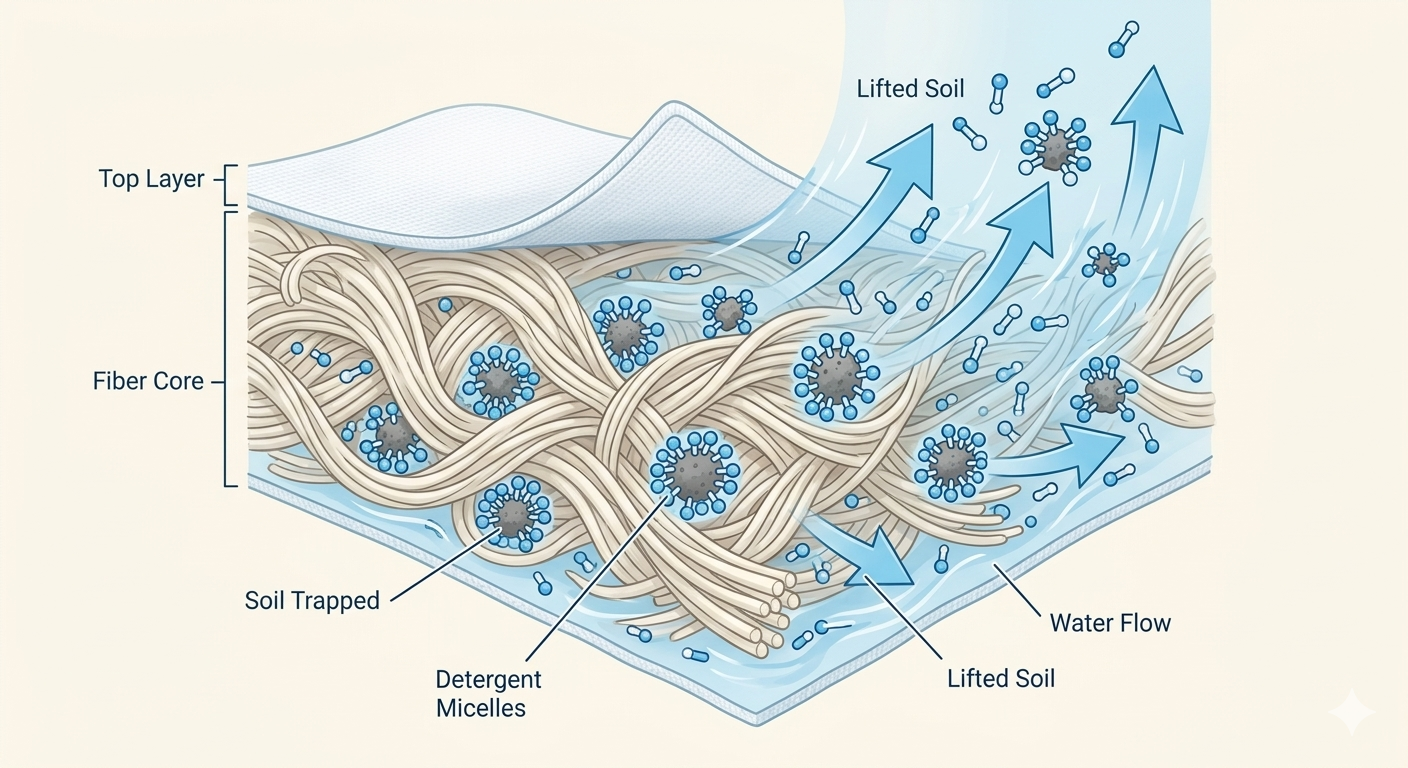
Using too little detergent prevents soils from being fully suspended in the wash water, which can leave residue trapped inside absorbent fibers.
The Myth of Detergent Buildup
One common concern among cloth diaper users is detergent buildup.
Modern detergents are designed to rinse away effectively during a proper wash routine. What many people describe as buildup is often caused by:
- insufficient detergent
- washer loads that are too small
- inadequate wash cycles
If washer loads are too small, agitation is reduced. This limits how well detergent can work. Learn how proper load size affects cleaning in our guide on how to wash cloth diapers properly.
How Much Detergent Should You Use for Cloth Diapers?
A typical cloth diaper washing routine includes two steps.
Pre-wash
The pre-wash removes most of the initial soil. A small amount of detergent is usually sufficient.
Main wash
The main wash is responsible for deep cleaning the absorbent layers. Because cloth diapers are heavily soiled, the main wash typically requires the full detergent amount recommended for heavily soiled laundry.
If you are unsure about detergent compatibility or washing routines, visit our:
EcoAble Troubleshooting & Washing Guides
Signs You May Be Using Too Little Detergent
Several common washing issues may indicate that detergent levels are too low.
Cloth diapers smell after washing
If diapers develop odor shortly after washing, soils may not have been fully removed.
Cloth diapers smell clean but stink when wet
This often means residue remains trapped in absorbent fibers.
Ammonia smell
Urine residues can break down into ammonia if not fully removed.
Reduced absorbency
Residue buildup can interfere with absorption.
Persistent barnyard odor
This usually means organic residues remain trapped in the fabric.
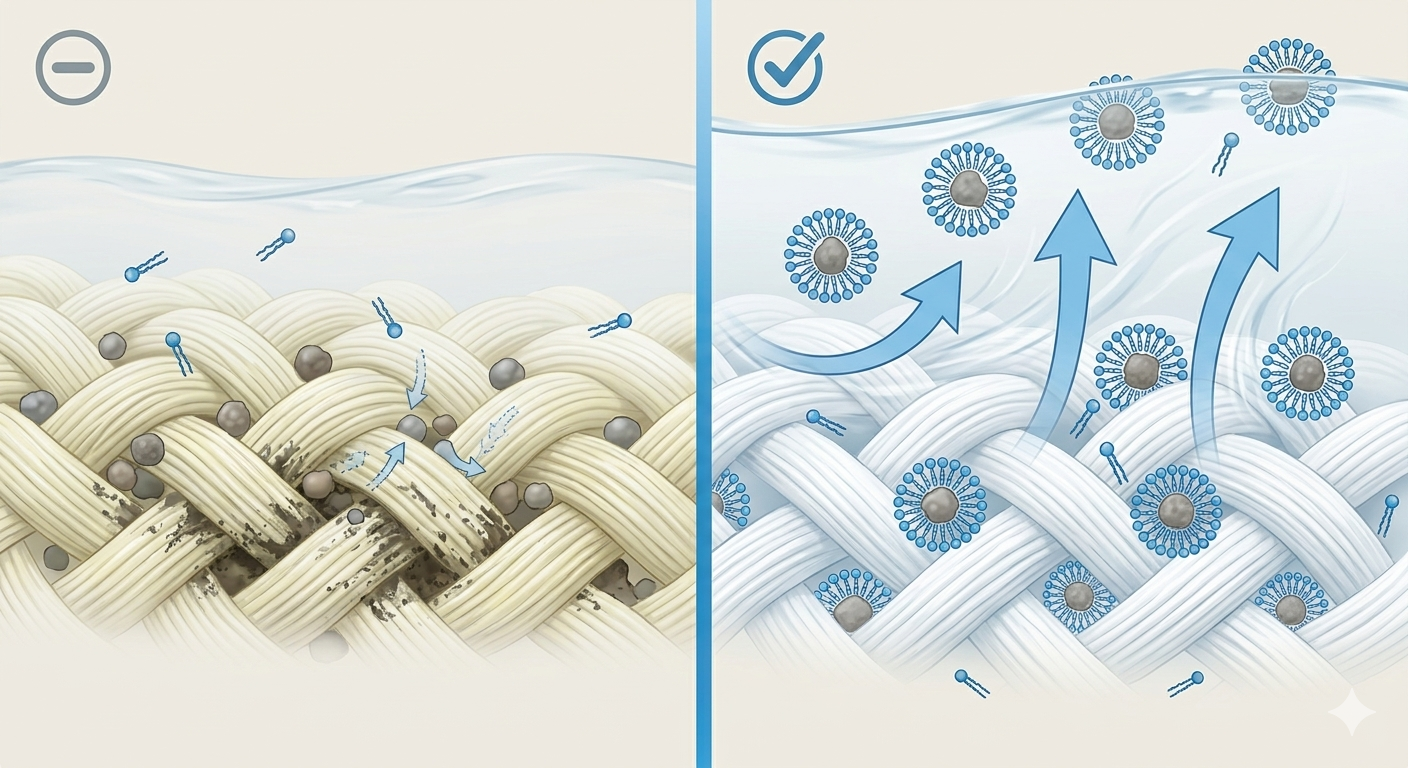
How Detergent Works with Agitation and Temperature
Detergent is only one part of a successful cloth diaper washing routine.
Three factors work together during washing:
- mechanical agitation
- detergent chemistry
- water temperature
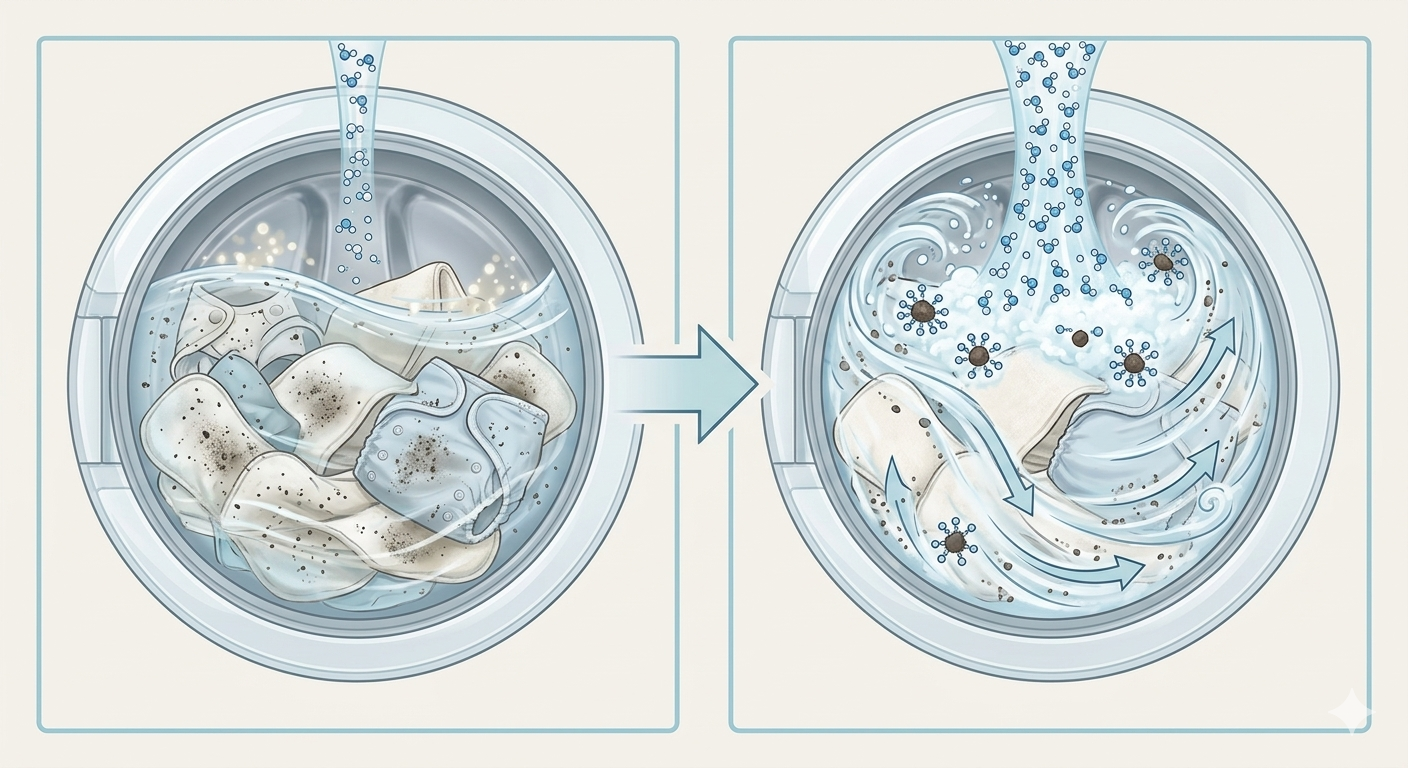
Agitation pushes soil out of fibers, while detergent lifts those soils so they can be rinsed away.
Water temperature can also improve detergent performance. Learn more here: Warm vs Hot Water: What Actually Cleans Cloth Diapers Best?.
A Simple Cloth Diaper Wash Routine That Works
- Pre-wash: short cycle with a small amount of detergent
- Main wash: longer cycle with the full detergent amount
- Proper load size: ensures good agitation and cleaning
Related EcoAble Products
EcoAble offers reusable cloth diapers and incontinence products designed for repeated washing and everyday use.
Key Takeaways
- Use a small detergent amount in the pre-wash
- Use the full detergent amount in the main wash
- Ensure proper agitation and washer load size
- Follow a consistent cloth diaper washing routine
Cloth Diaper Detergent FAQ
How much detergent should you use for cloth diapers?
Most routines use a small amount in the pre-wash and the full amount for heavily soiled laundry in the main wash.
Can too little detergent cause cloth diaper odor?
Yes. Low detergent levels can leave soil trapped in the fibers, leading to odor.
Do cloth diapers need special detergent?
No. Many regular detergents work well when used correctly.
Can reusable incontinence products be washed the same way?
Yes. They follow the same washing principles due to similar soil levels.