
How to Wash Cloth Diapers: The #1 Mistake That Causes Odor and Buildup
A proper cloth diaper washing routine is essential for keeping reusable diapers and incontinence products clean, fresh, and absorbent.
If cloth diapers smell fine when dry but unpleasant when wet, lose absorbency, or develop lingering odor after washing, the problem is often not the diaper itself. In many cases, the real issue is a wash load that is too small to create enough agitation for proper cleaning.
This can affect baby cloth diapers, big kid reusable diapers, and adult cloth incontinence products alike.
For more detailed wash instructions and troubleshooting tips, see our EcoAble Troubleshooting & Washing Guides.
Related washing guides:
Are You Using Enough Detergent for Cloth Diapers?
Warm vs Hot Water: What Actually Cleans Cloth Diapers Best?
Why Do Cloth Diapers Start to Smell? (And How to Fix It)
The Science Behind Washing Cloth Diapers Properly
The #1 Mistake: Washing Cloth Diapers Separately
A very common belief is that cloth diapers should always be washed separately from other laundry.
While that may sound more hygienic, it often creates a load that is too small for modern washing machines to clean effectively. Without enough fabric rubbing against fabric during the wash cycle, soils can stay trapped in the absorbent layers.
This is one of the most common reasons cloth diapers smell after washing, develop buildup over time, or seem clean at first but stink when wet.
Temperature and detergent still matter, but even the best products cannot fully compensate for weak agitation. That is also why water temperature should be considered as part of the full routine. If you are unsure which setting to use, see Warm vs Hot Water: What Actually Cleans Cloth Diapers Best?.
How Full Should a Washing Machine Be for Cloth Diapers?
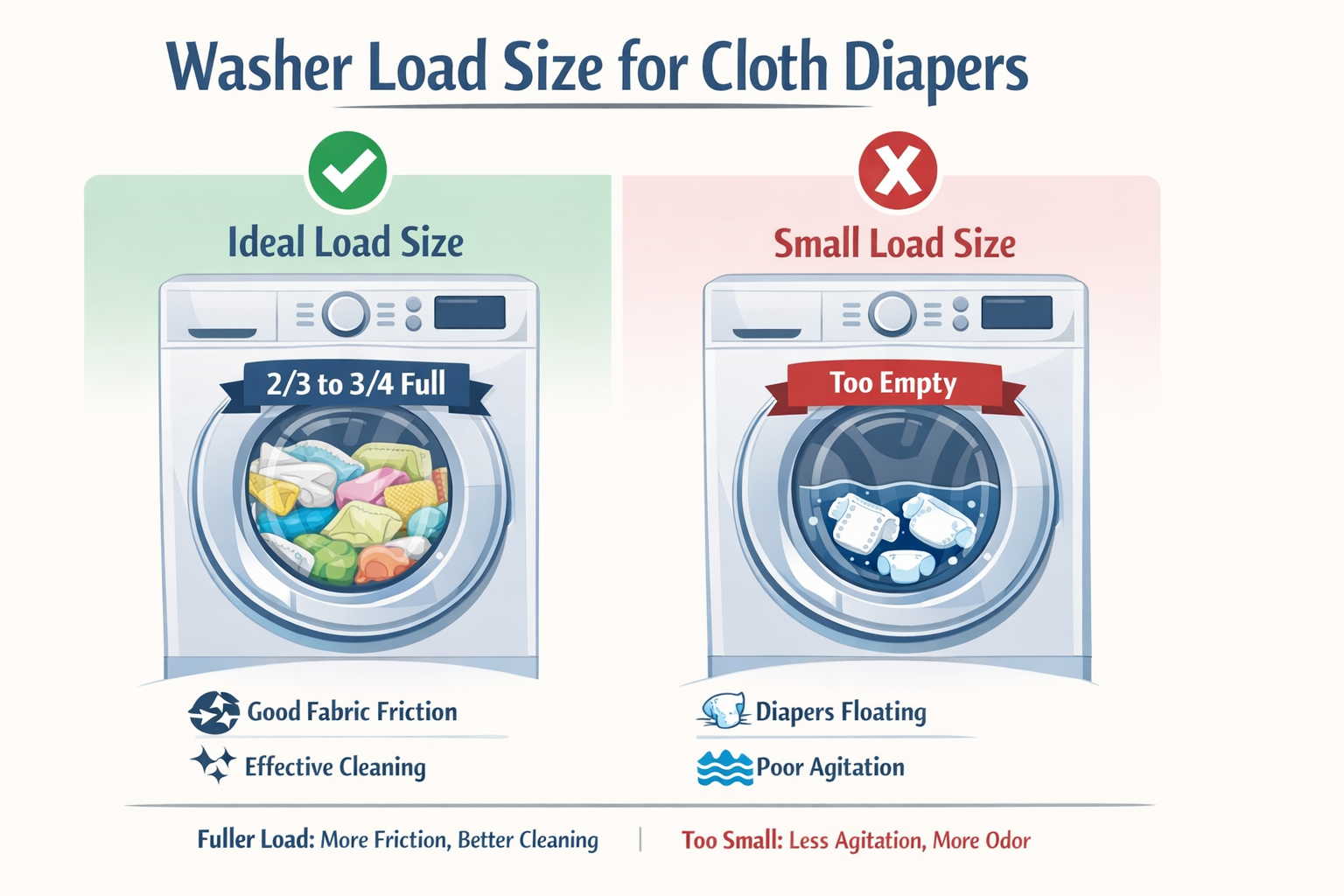
A common question people ask is:
How full should a washer be for cloth diapers?
During the main wash cycle, the washing machine drum should usually be about two-thirds to three-quarters full when wet.
This level allows fabrics to move, tumble, and rub against each other during agitation.
When the washer is filled properly:
- fabrics tumble against each other
- detergent distributes more evenly
- soils are pushed out of absorbent layers
When the load is too small:
- fabrics float more freely
- agitation is reduced
- residues may remain trapped inside the diaper
This is one of the most common reasons cloth diapers may seem washed but still develop odor later.
How Washing Machines Actually Clean Laundry
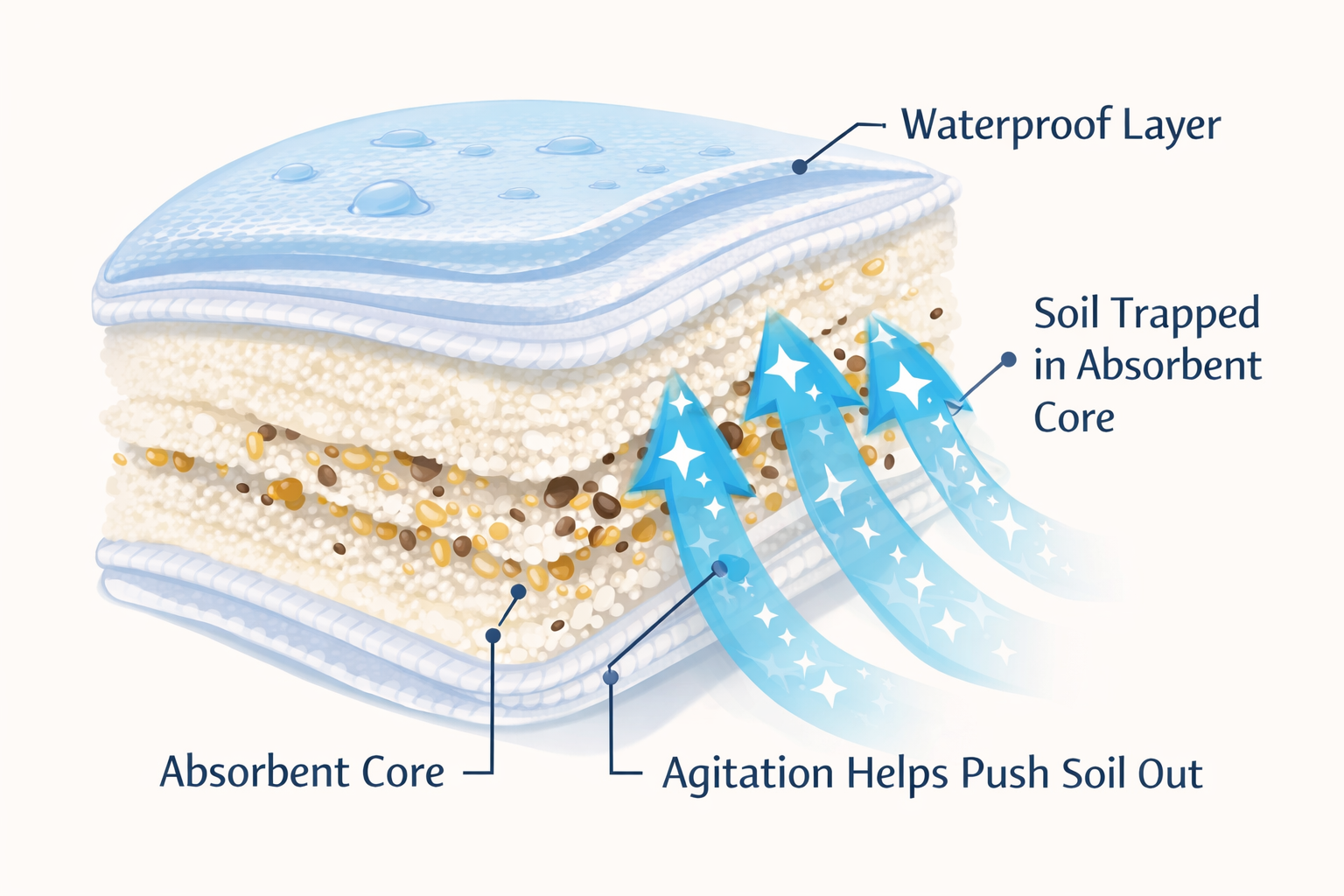
To understand why load size matters, it helps to understand how washing machines clean fabric.
Three main factors work together during washing:
Mechanical action
Friction between fabrics helps push soil out of fibers and absorbent layers.
Detergent chemistry
Detergents lift oils, urine salts, and organic residues so they can stay suspended in the wash water and rinse away.
Water temperature
Warm or hot water can help dissolve oils and improve detergent performance, especially with heavily soiled laundry.
Even when using a strong detergent, mechanical agitation is still critical. Without enough fabric movement, soil may remain trapped inside absorbent materials.
Common Cloth Diaper Washing Problems (and What They Mean)
Certain symptoms can point to problems in a cloth diaper washing routine.
Cloth diapers smell clean but stink when wet
This usually means soil is still trapped in the absorbent layers.
Possible causes include:
- loads that are too small
- insufficient agitation
- not enough detergent
Ammonia smell after washing
A strong ammonia odor can develop when urine residues remain in the fabric.
Possible causes include:
- insufficient detergent
- inadequate wash cycles
- buildup over time
Cloth diapers lose absorbency
If diapers begin leaking sooner than expected, buildup inside the fibers may interfere with absorption.
Improving the wash routine, increasing agitation, and using enough detergent can often help restore performance.
Persistent barnyard odor
A strong musty or barnyard smell usually means organic residues are still trapped in the fabric.
This often points to a wash routine issue such as:
- washer loads that are too small
- insufficient detergent
- cycles that are not strong enough for heavily soiled laundry
How to Bulk a Cloth Diaper Load Properly
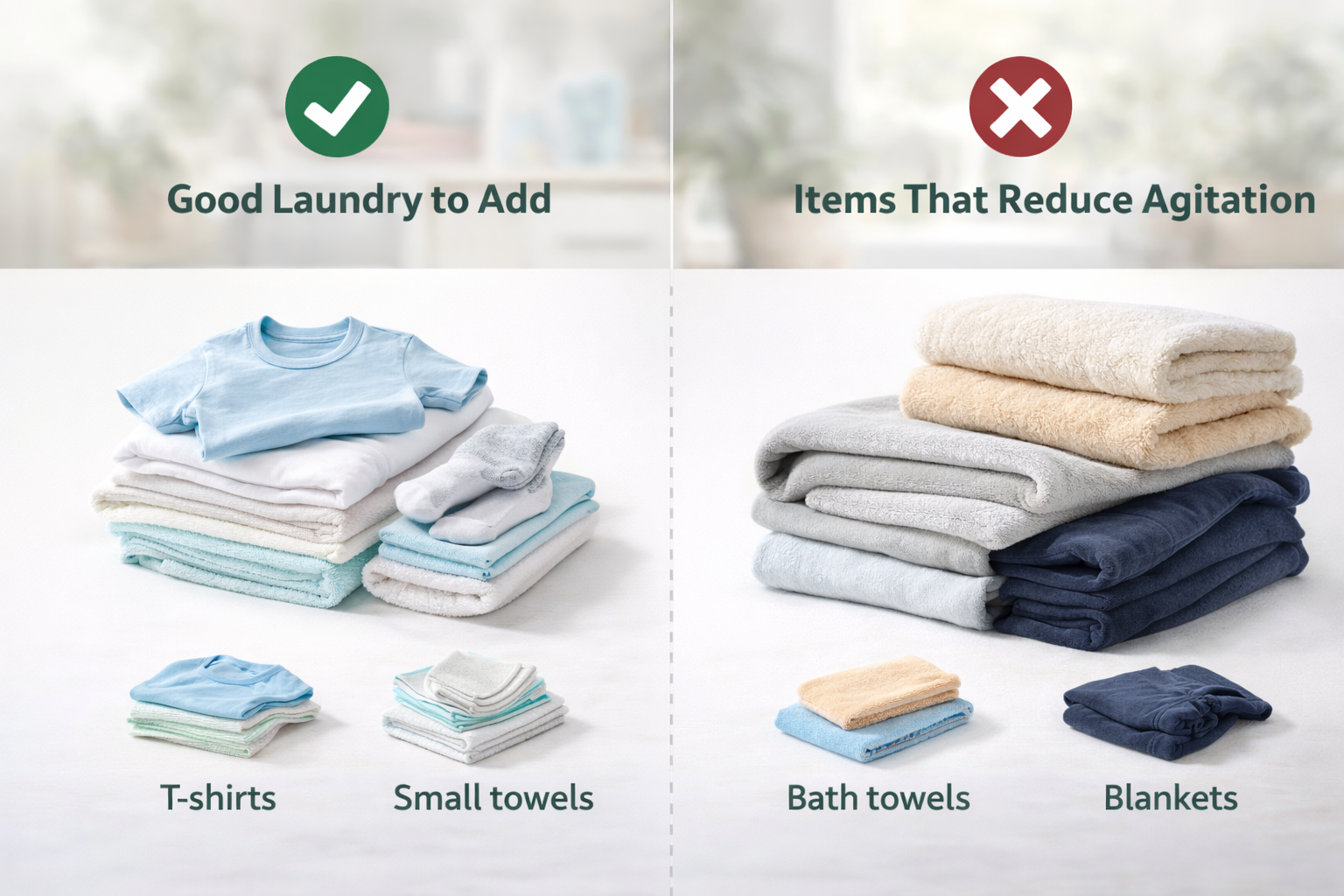
If there are not enough diapers to fill the washing machine, you can add small laundry items to increase the load size.
Good items to add include:
- t-shirts
- underwear
- socks
- washcloths
- small towels
Items that are usually best avoided include:
- large bath towels
- blankets
- bulky items
Bulky items absorb large amounts of water and can reduce the friction needed for proper cleaning.
A Simple Cloth Diaper Wash Routine That Works
A typical cloth diaper washing routine includes two steps.
Pre-wash
A shorter wash cycle with a small amount of detergent helps remove the initial soil.
Main wash
The main wash should include:
- a longer wash cycle
- a full amount of detergent
- a properly sized load that is two-thirds to three-quarters full when wet
This helps remove deeper soil from the absorbent layers and reduces the chance of lingering odor or buildup.
For more detailed instructions and troubleshooting advice, see our guide:
EcoAble Troubleshooting & Washing Guides
Related EcoAble Products
EcoAble offers reusable cloth diapers and incontinence products designed for repeated washing and everyday use. You can explore options for babies, big kids, and adults here:
Frequently Asked Questions
Should cloth diapers be washed separately from other laundry?
Not usually. Washing cloth diapers separately often creates a load that is too small, which reduces agitation and can leave soil trapped in the absorbent layers.
Why is washing cloth diapers separately a mistake?
When the washer load is too small, fabrics do not rub against each other enough during the wash cycle. That reduces mechanical cleaning and can lead to odor, buildup, and reduced absorbency.
How full should a washer be for cloth diapers?
During the main wash, the washer drum should usually be about two-thirds to three-quarters full when wet. This helps create enough friction for better cleaning.
What can you add to bulk a cloth diaper load?
You can usually add small laundry items such as t-shirts, underwear, socks, washcloths, or small towels. Avoid bulky items like blankets and large bath towels because they can reduce agitation.
Can a load that is too small make cloth diapers smell after washing?
Yes. Small loads often reduce agitation, which can leave soil and urine residue trapped inside the absorbent fibers. That can cause diapers to smell clean when dry but unpleasant when wet.
Can you wash cloth diapers with regular clothes?
Yes, in many cases you can add small clothing items such as t-shirts, socks, underwear, and washcloths to bulk the main wash. Avoid bulky items like blankets or large towels because they can reduce agitation.
Related Articles
Continue learning about diaper washing and troubleshooting: