


The Science Behind Washing Cloth Diapers Properly
Cloth diapers deal with some of the most demanding laundry soils: urine, bacteria, body oils, and organic residue. That is why washing cloth diapers properly takes more than running a standard laundry cycle.
Most washing problems, including odor, ammonia smell, leaks, and buildup, happen when one part of the cloth diaper washing routine is too weak. If you want the full step-by-step routine first, start with our guide on how to wash cloth diapers properly.
This article explains the science behind why cloth diaper wash routines succeed or fail, including detergent chemistry, agitation, water temperature, and wash cycle length.

Quick Answer: Proper cloth diaper washing removes urine, bacteria, body oils, and organic residue by combining enough detergent, strong agitation, the right water temperature, and sufficient wash time. When one of these factors is too weak, diapers may start to smell, leak, or lose absorbency.
- What Is Proper Cloth Diaper Washing?
- Why Cloth Diapers Sometimes Smell After Washing
- Cloth Diaper Washing Problems and Their Causes
- Why Washing Cloth Diapers Is Different From Regular Laundry
- How Washing Machines Actually Clean Fabric
- The Four Factors That Clean Cloth Diapers
- Detergent Chemistry
- Mechanical Agitation
- Water Temperature
- Why Cloth Diapers Need Two Wash Cycles
- The Science-Based Cloth Diaper Wash Routine
- FAQ
Related washing guides:
How Much Detergent for Cloth Diapers?
Warm vs Hot Water: What Actually Cleans Cloth Diapers Best?
Why Do Cloth Diapers Start to Smell? (And How to Fix It)
What Is Proper Cloth Diaper Washing?
Proper cloth diaper washing removes urine, bacteria, body oils, and organic residues from absorbent fabrics using detergent, agitation, water temperature, and enough wash time.
When these factors work together, soils are lifted from the fibers and rinsed away, leaving diapers clean, odor-free, and absorbent.
Why Cloth Diapers Sometimes Smell After Washing
One of the most common cloth diaper washing problems is odor that appears when diapers become wet again.
This usually happens when small amounts of soil remain trapped inside the absorbent layers. The diapers may smell clean when dry, but moisture releases those trapped compounds and makes the odor noticeable again.
Common causes include:
- insufficient detergent
- washer loads that are too small
- weak agitation
- residue buildup over time
If you are troubleshooting odor specifically, see our guide on why cloth diapers start to smell.
Cloth Diaper Washing Problems and Their Causes
Most cloth diaper washing issues happen when one or more of the core cleaning factors becomes unbalanced.
Why do cloth diapers leak after washing?
Cloth diapers may leak after washing when residue buildup interferes with absorbency. Oils, detergent residue, or mineral deposits can remain trapped in the fibers and make the fabric absorb less effectively.
Odor after washing
If cloth diapers smell clean when dry but develop odor once wet, residue may still be trapped in the absorbent layers. Learn more: Why Do Cloth Diapers Start to Smell?
Detergent problems
Using too little detergent can leave oils and residue behind, especially in heavily soiled loads. Learn more: How Much Detergent for Cloth Diapers?
Poor agitation
Loads that are too small reduce friction during the wash cycle and make it harder for fabrics to clean thoroughly. Learn more: How to Wash Cloth Diapers Properly
Temperature confusion
Water temperature affects how detergents dissolve oils and residues, but heat alone is not enough. Learn more: Warm vs Hot Water: What Actually Cleans Cloth Diapers Best?
Why Washing Cloth Diapers Is Different From Regular Laundry
Regular clothing usually contains lighter soils such as sweat, dust, or small amounts of body oils. Cloth diapers absorb concentrated biological waste and moisture repeatedly.
Common soils in cloth diapers include:
- urine salts
- body oils
- bacteria
- organic residues
Because absorbent diaper fabrics trap these soils deep inside their fibers, they require a stronger and more consistent washing routine than most everyday laundry.
If diapers are not washed thoroughly, residue can remain inside the absorbent layers and lead to odor, reduced absorbency, leaks, or skin irritation.
How Washing Machines Actually Clean Fabric
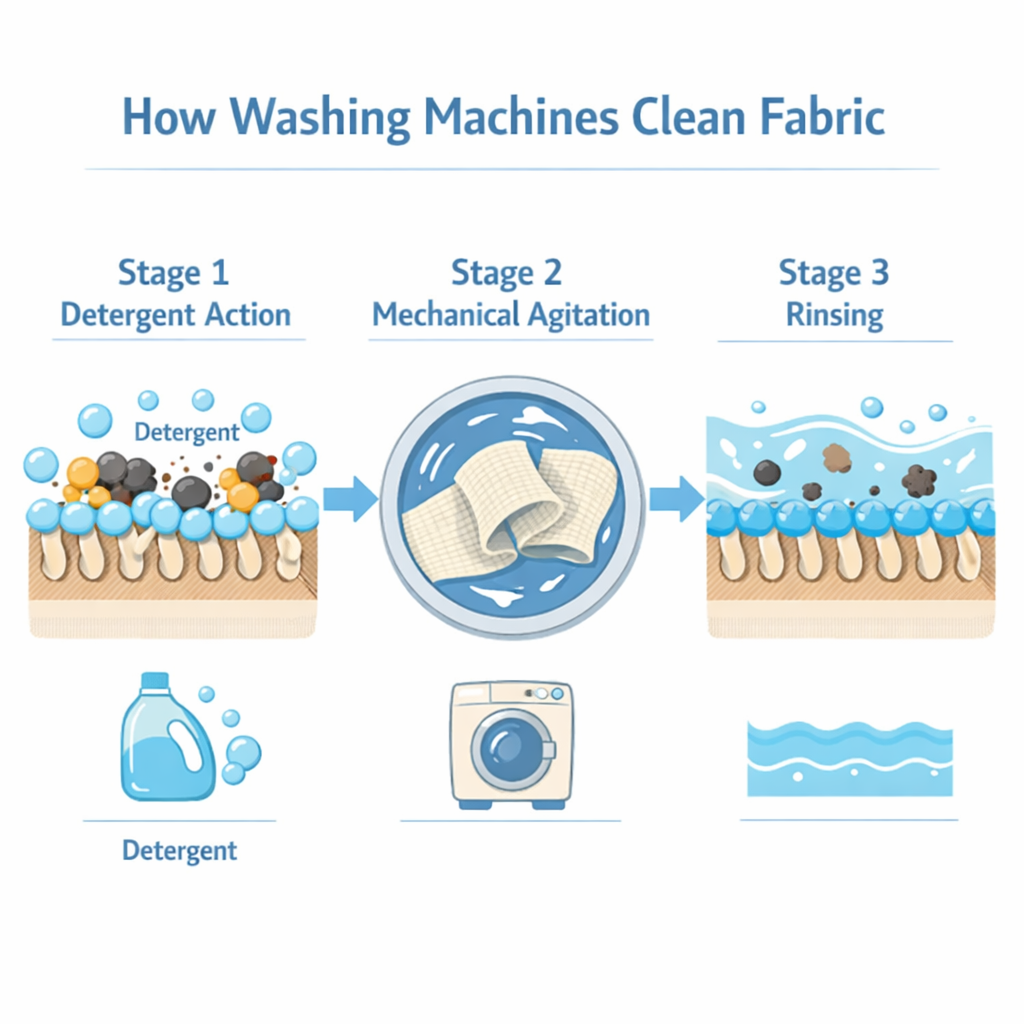
Laundry cleaning works through a combination of chemistry and mechanical action.
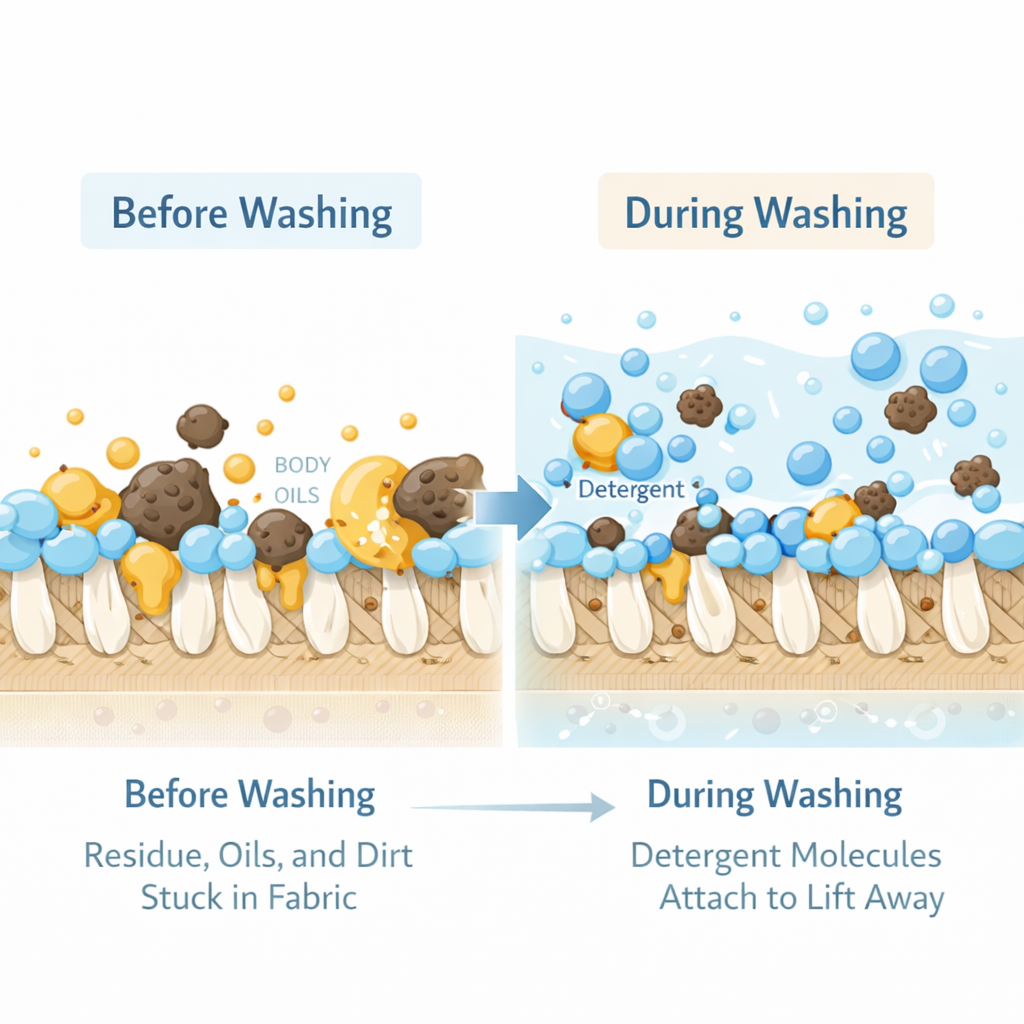
Detergent molecules attach to oils and organic soils trapped inside the fabric, surround them, and help lift them away so they can stay suspended in the wash water.
At the same time, the washing machine agitates the fabrics. This movement loosens residue and helps detergent reach deeper into the absorbent material. The rinse cycle then flushes suspended soil away.
Without this combination of detergent chemistry, agitation, and rinsing, residue can remain trapped inside the fabric even if the diapers look clean at first.
How Laundry Cleaning Actually Works
Cloth diapers get clean in three stages:
- Detergent breaks down oils and organic residues.
- Agitation loosens soil from fabric fibers.
- Rinsing carries the suspended soil away.
If any of these steps is weak, such as insufficient detergent or poor agitation, residue can stay trapped inside the diaper.
The Four Factors That Clean Cloth Diapers
Cloth diaper washing works through four main cleaning forces: detergent chemistry, mechanical agitation, water temperature, and wash cycle length.
- detergent chemistry
- mechanical agitation
- water temperature
- wash cycle length
When one of these elements is too weak, the washing routine may not fully remove soil from the fabric.
Detergent Chemistry
Detergents contain surfactants that attach to oils and residue trapped inside absorbent fabrics. Once surrounded by detergent molecules, soils stay suspended in the wash water until they rinse away.
Using too little detergent can leave residue behind. For detailed guidance, read How Much Detergent for Cloth Diapers?
What Removes Urine Smell From Cloth Diapers?
A strong detergent combined with proper agitation and sufficient wash time removes urine residue more effectively than temperature alone.
Mechanical Agitation
Mechanical agitation helps loosen residue trapped inside cloth diaper fibers. As fabrics move and rub together during the wash cycle, detergent can reach deeper into the absorbent layers.
If the washer load is too small, fabrics may not create enough friction for effective cleaning. This is one of the most common reasons cloth diapers do not get fully clean. Learn more in our guide on how to wash cloth diapers properly.
Water Temperature
Water temperature affects how quickly detergents dissolve oils and residues.
Warm water helps detergents break down body oils and urine salts more efficiently than cold water. Hot water may sometimes help with strong odor or buildup, but temperature alone does not guarantee effective cleaning.
For a full breakdown of temperature, see Warm vs Hot Water: What Actually Cleans Cloth Diapers Best?.
Do Washing Machines Remove Bacteria From Cloth Diapers?
Yes. Washing machines remove bacteria from cloth diapers when detergent, agitation, rinsing, and wash time work together.
Detergents break down organic waste and suspend bacteria in the wash water so they can be rinsed away. Mechanical agitation also helps detach microorganisms from fabric surfaces.
Why Cloth Diapers Need Two Wash Cycles
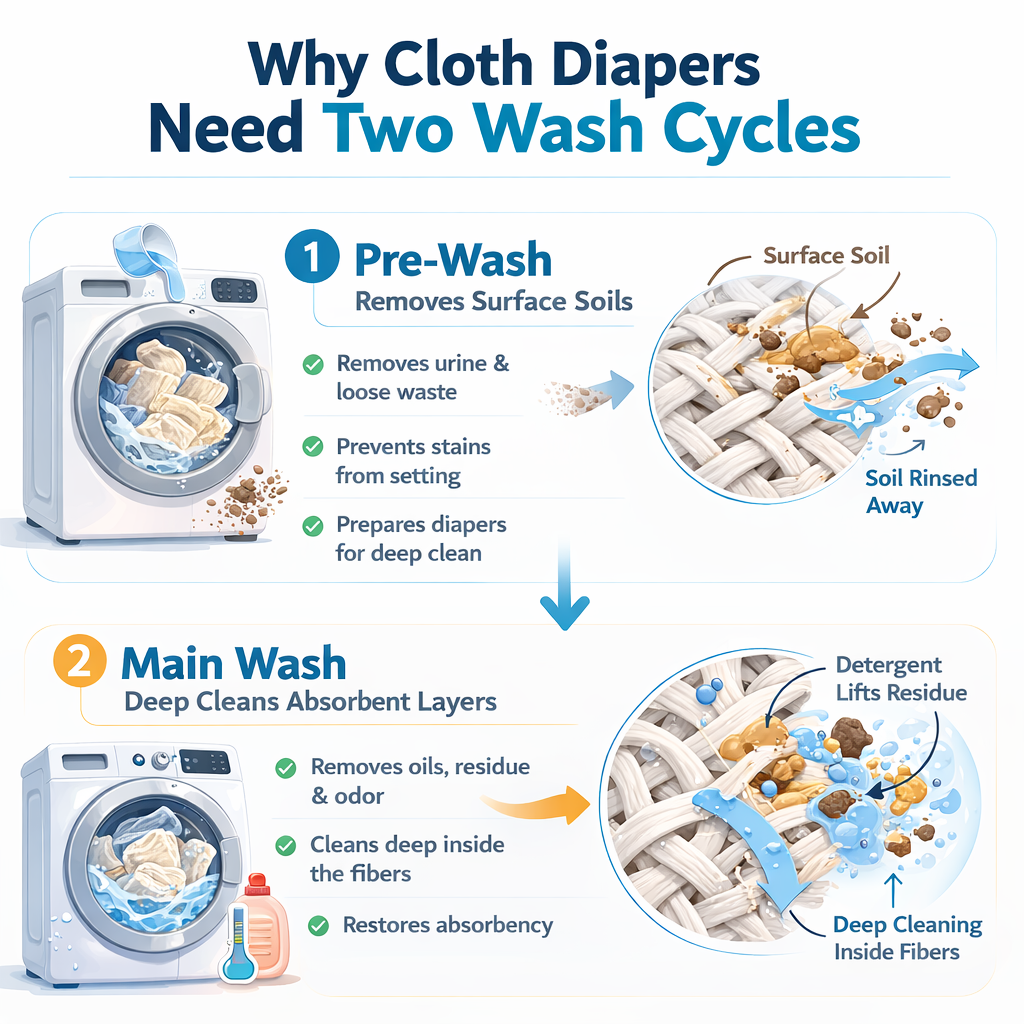
Cloth diapers usually need two wash cycles because the first cycle removes surface soil and waste, while the second cycle performs deep cleaning of the absorbent layers.
The first cycle removes surface soils. The second cycle cleans more deeply into the absorbent fabrics.
The Science-Based Cloth Diaper Wash Routine
- Pre-wash: short cycle with a small detergent amount to remove surface soil
- Main wash: longer cycle with the full detergent amount to deeply clean absorbent layers
- Proper load size: drum about two-thirds to three-quarters full when wet
This balanced approach gives detergent chemistry, agitation, water temperature, and wash time a chance to work together.
For the full routine, see how to wash cloth diapers properly.
Frequently Asked Questions
Why do cloth diapers need two wash cycles?
Cloth diapers need two wash cycles because the first removes surface soil and waste, while the second performs deeper cleaning of the absorbent layers.
Why do cloth diapers smell after washing?
Cloth diapers usually smell after washing when residue remains trapped inside absorbent fibers because of insufficient detergent, weak agitation, or inadequate wash time.
What removes urine smell from cloth diapers?
A strong detergent combined with proper agitation and sufficient wash time removes urine residue more effectively than temperature alone.
Do washing machines remove bacteria from cloth diapers?
Yes. Washing machines remove bacteria from cloth diapers when detergent, agitation, rinsing, and wash time work together to detach and flush microorganisms away.
Why do cloth diapers leak after washing?
Cloth diapers may leak after washing when residue buildup interferes with absorbency inside the fabric.