
Warm vs Hot Water: What Actually Cleans Cloth Diapers Best?
What temperature should you use to wash cloth diapers: warm or hot?
For most cloth diaper routines, warm water is the best starting point. It usually cleans well when combined with the right detergent, proper load size, and strong agitation. Hot water can help when diapers develop odor, ammonia smell, or buildup, but it is not usually the main thing that fixes the problem.
If you want to understand how all parts of the wash process work together, start with our guide on how to wash cloth diapers properly, which explains the most common mistake that leads to odor and buildup.
Water temperature matters, but it works together with detergent, agitation, and wash cycles. That is why the best temperature depends on soil level and the overall cloth diaper washing routine.
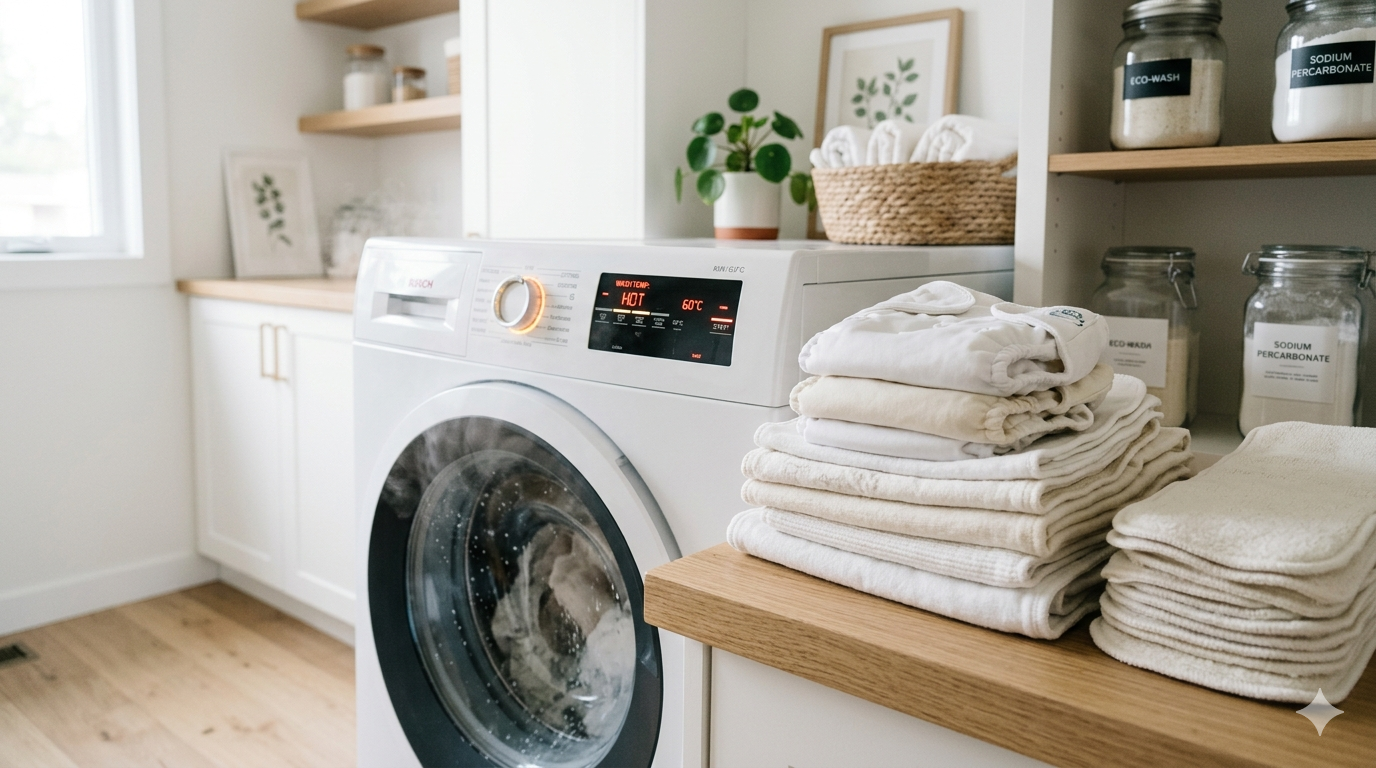
Quick Answer: Warm water is usually best for everyday cloth diaper washing because it helps detergent dissolve oils and residue while being gentler on fabrics and waterproof layers. Hot water can be useful when diapers develop odor, ammonia smell, or buildup, but temperature alone does not fix washing problems.
- What Temperature Should You Wash Cloth Diapers?
- Why Hot Water Alone Doesn’t Fix Odor
- Cloth Diaper Washing Temperature Guide
- Why Water Temperature Matters
- Warm Water Benefits
- When Hot Water Helps
- Does Washer Type Affect Water Temperature?
- Do You Need Hot Water to Kill Bacteria?
- Can Hot Water Damage Cloth Diapers?
- Recommended Cloth Diaper Wash Routine
- Frequently Asked Questions
Related washing guides:
How Much Detergent for Cloth Diapers?
Why Do Cloth Diapers Start to Smell? (And How to Fix It)
The Science Behind Washing Cloth Diapers Properly
What Temperature Should You Wash Cloth Diapers?
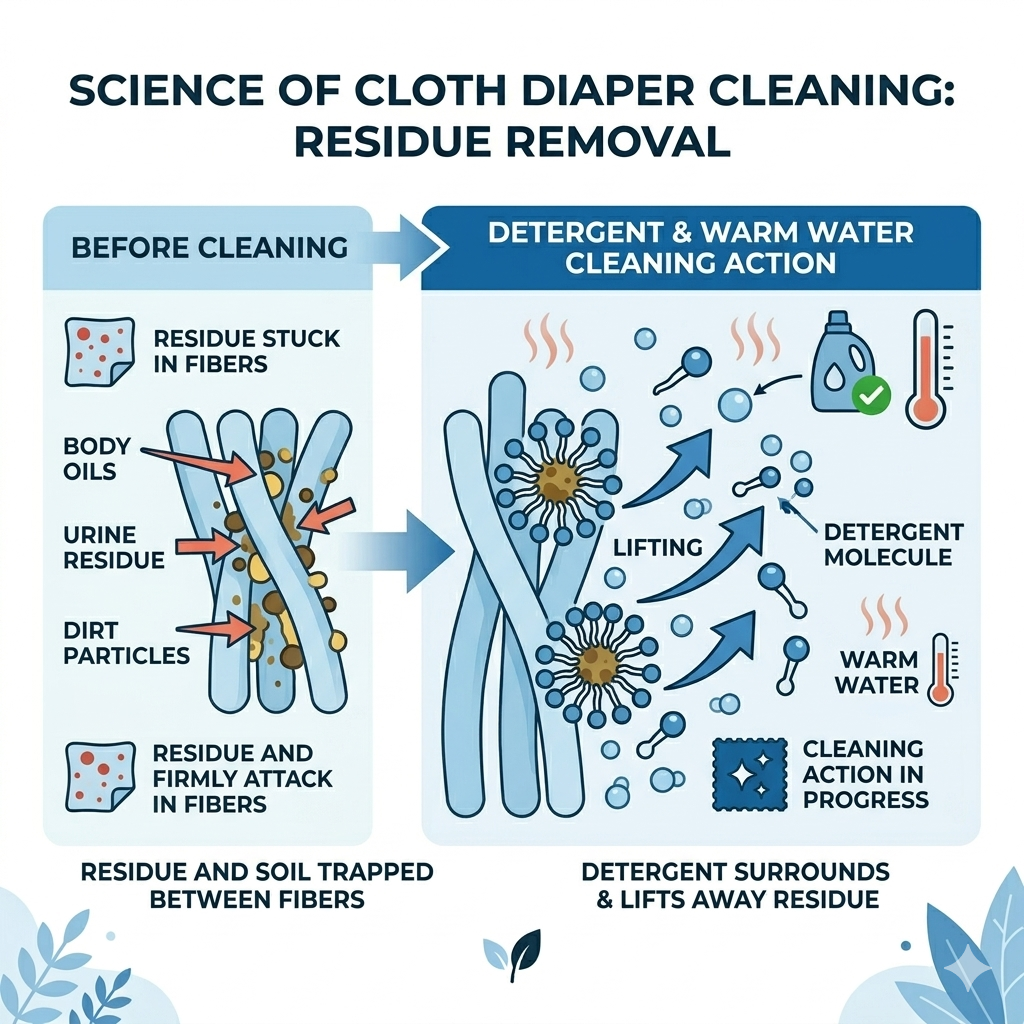
Most cloth diaper routines work best when the main wash uses warm water, typically around 90–110°F (32–43°C). Warm water helps detergent dissolve oils and urine residues trapped inside absorbent fibers.
Hot water up to about 130°F (54°C) may occasionally help when diapers develop odor, ammonia smell, or buildup. However, warm water is usually enough when the washing routine includes proper detergent, good agitation, and the correct washer load size.
For everyday washing, warm water offers the best balance between cleaning performance and protecting elastics and waterproof layers.
Why Hot Water Alone Doesn’t Fix Cloth Diaper Odor
Many people switch to hot water when cloth diapers start to smell. Sometimes that helps, but temperature is only one part of the cleaning process.
Cloth diaper washing depends on three factors working together:
- detergent chemistry
- mechanical agitation
- water temperature
If detergent levels are too low or washer loads are too small, soil can remain trapped inside absorbent fibers even when using hot water. That is why hot water alone does not always eliminate odor, ammonia, or buildup.
If diapers smell clean when dry but develop odor once wet, the problem is often incomplete cleaning rather than temperature alone. See our troubleshooting guide on why cloth diapers start to smell.
Proper load size also matters more than many people realize. If the washer is too empty, agitation drops and cleaning performance suffers. Learn more in our guide on how to wash cloth diapers properly.
Cloth Diaper Washing Temperature Guide
In most washing machines:
- Warm water: roughly 90–110°F (32–43°C)
- Hot water: roughly 120–130°F (49–54°C)
Most cloth diaper routines use warm water for everyday washing. Hot water can be useful occasionally when addressing odor, illness, or heavier buildup.
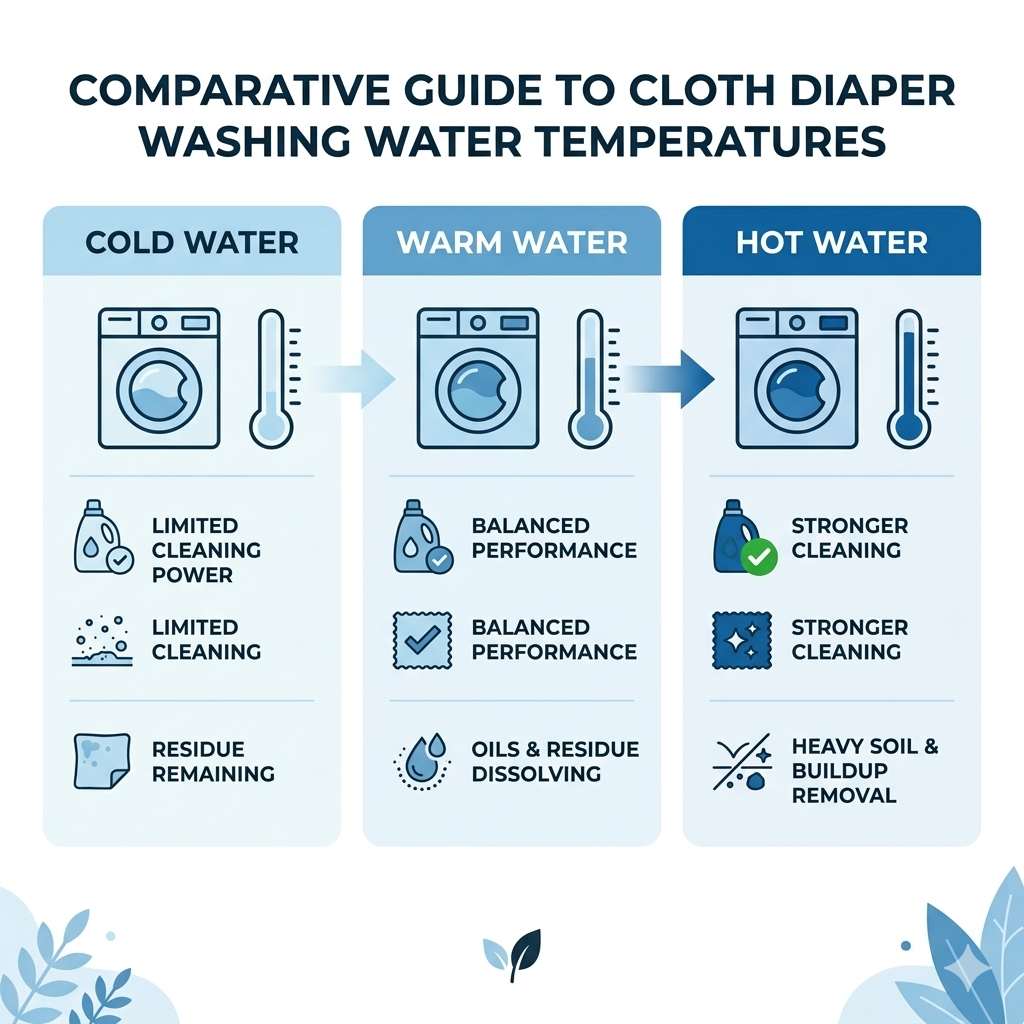
| Water Temperature | How It Cleans | When to Use |
|---|---|---|
| Cold Water | Limited ability to dissolve oils and urine residues | Sometimes used for pre-wash in standard machines, but usually not ideal for the main wash |
| Warm Water | Helps detergents dissolve oils and lift residue | Best for most everyday pre-wash and main wash cycles |
| Hot Water | Improves removal of heavy soils, oils, and residue | Helpful when diapers develop odor, ammonia, or buildup |
Why Water Temperature Matters for Cloth Diapers
Cloth diapers and reusable incontinence products absorb heavier soils than typical laundry.
These soils may include:
- urine salts
- body oils
- bacteria
- organic residues
Water temperature helps detergent dissolve oils and loosen soil trapped inside absorbent fibers. When combined with proper detergent levels and good agitation, temperature helps carry those soils away during the rinse cycle.
Warm Water Benefits
Warm water works well for most cloth diaper washing routines. When combined with a strong detergent and proper washer load size, warm water can remove most soils effectively.
Warm water also has practical advantages:
- gentler on elastics
- safer for waterproof PUL layers during routine washing
- compatible with most modern detergents
For many households, warm water provides a good balance between cleaning performance and fabric longevity.
When Hot Water Helps
Hot water can improve cleaning performance when diapers contain heavier soils or develop persistent washing issues.
Using hot water may help when:
- cloth diapers develop odor after washing
- ammonia smell appears
- residue buildup occurs
Hot water helps detergents dissolve oils and urine residues more quickly, but it still works best when the rest of the wash routine is solid.
Does Washer Type Affect Water Temperature?
Yes. High-efficiency (HE) washers often use less water and may mix hot and cold water to reach preset temperatures. That means the actual water temperature inside the drum may be lower than the machine setting.
Because HE washers use less water, proper detergent levels and load size become even more important for effective cleaning.
Do HE Washing Machines Use Hot Water for Cloth Diapers?
Many HE washers mix hot and cold water automatically to reach preset temperatures. Using the longest heavy-duty cycle with strong agitation usually improves results when washing cloth diapers in these machines.
Do You Need Hot Water to Kill Bacteria in Cloth Diapers?
Many people assume cloth diapers must be washed in very hot water to remove bacteria. In most cases, that is not necessary.
Modern laundry detergents break down organic soils and suspend bacteria so they can rinse away during the wash cycle. Cleaning effectiveness usually depends more on:
- using the correct detergent amount
- running both a pre-wash and main wash
- ensuring proper washer load size
Warm water combined with a proper wash routine is often enough to clean cloth diapers effectively. For detergent guidance, see How Much Detergent for Cloth Diapers?.
Can Hot Water Damage Cloth Diapers?
Hot water washing is generally safe for modern cloth diapers when used appropriately. Most waterproof layers and elastics are designed to tolerate normal hot wash cycles within manufacturer limits.
However, extremely high temperatures or repeated high heat drying may shorten the lifespan of elastics and waterproof layers over time. A balanced wash routine is usually the smarter long-term approach.
Recommended Cloth Diaper Wash Routine
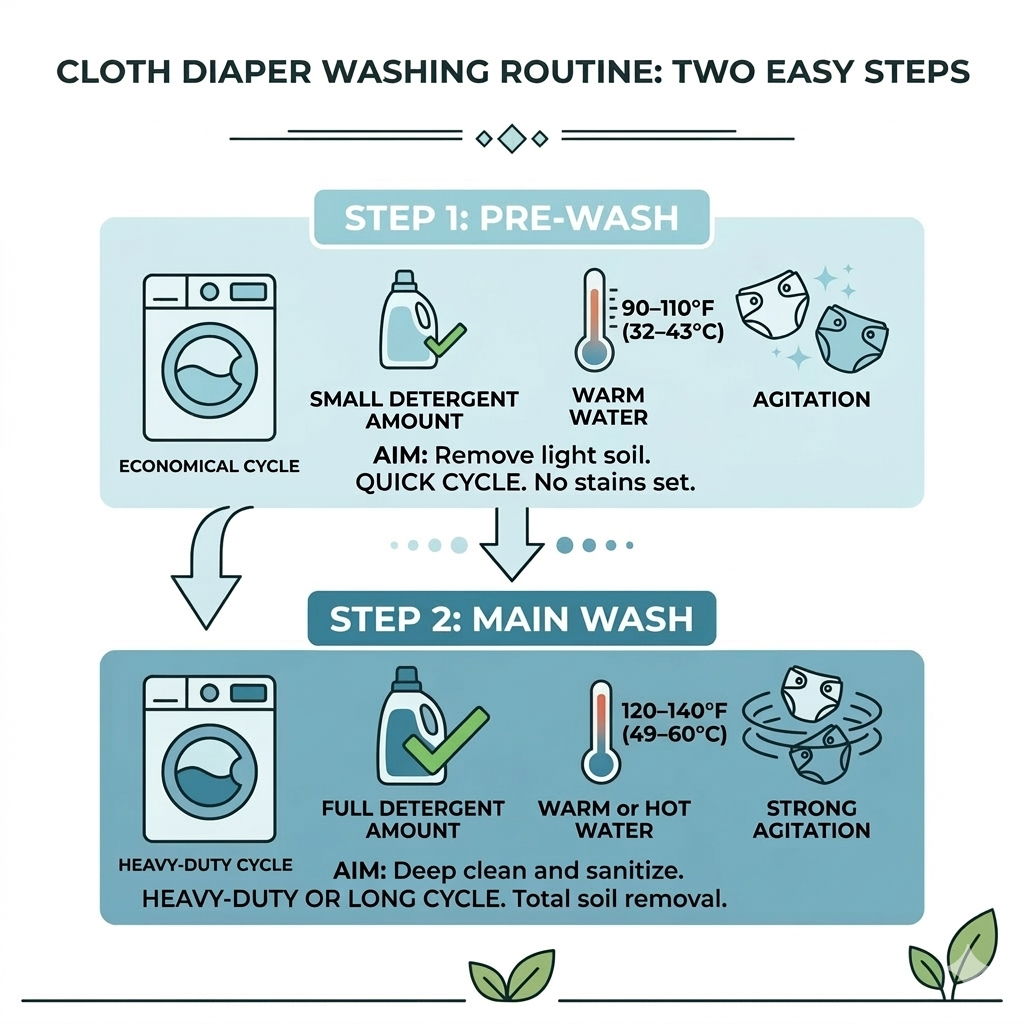
- Pre-wash: short cycle with cold or warm water and a small detergent amount
- Main wash: longer cycle with warm or hot water and full detergent amount
- Proper load size: washer about two-thirds to three-quarters full when wet
For step-by-step instructions, see our complete guide on how to wash cloth diapers properly.
Frequently Asked Questions
Do cloth diapers need to be washed in hot water?
Not always. Warm water combined with proper detergent and agitation often cleans cloth diapers effectively. Hot water can help when diapers have odor, ammonia smell, or buildup.
Is warm water enough for cloth diapers?
Yes. Many washing routines use warm water successfully, especially when the washer load size and detergent levels are correct.
Can you wash cloth diapers in cold water?
Cold water can be used in some pre-wash routines, but it usually does not remove oils and urine residues as effectively as warm water. Most cloth diaper routines rely on warm water for the main wash.
Can hot water damage cloth diapers?
Normal hot wash cycles are generally safe within manufacturer guidelines, but repeated high heat drying may shorten the lifespan of elastics or waterproof layers.
What temperature removes bacteria from cloth diapers?
Detergent chemistry and agitation play a major role in removing bacteria. Warm or hot water combined with a proper wash routine can effectively clean diapers.