


Description
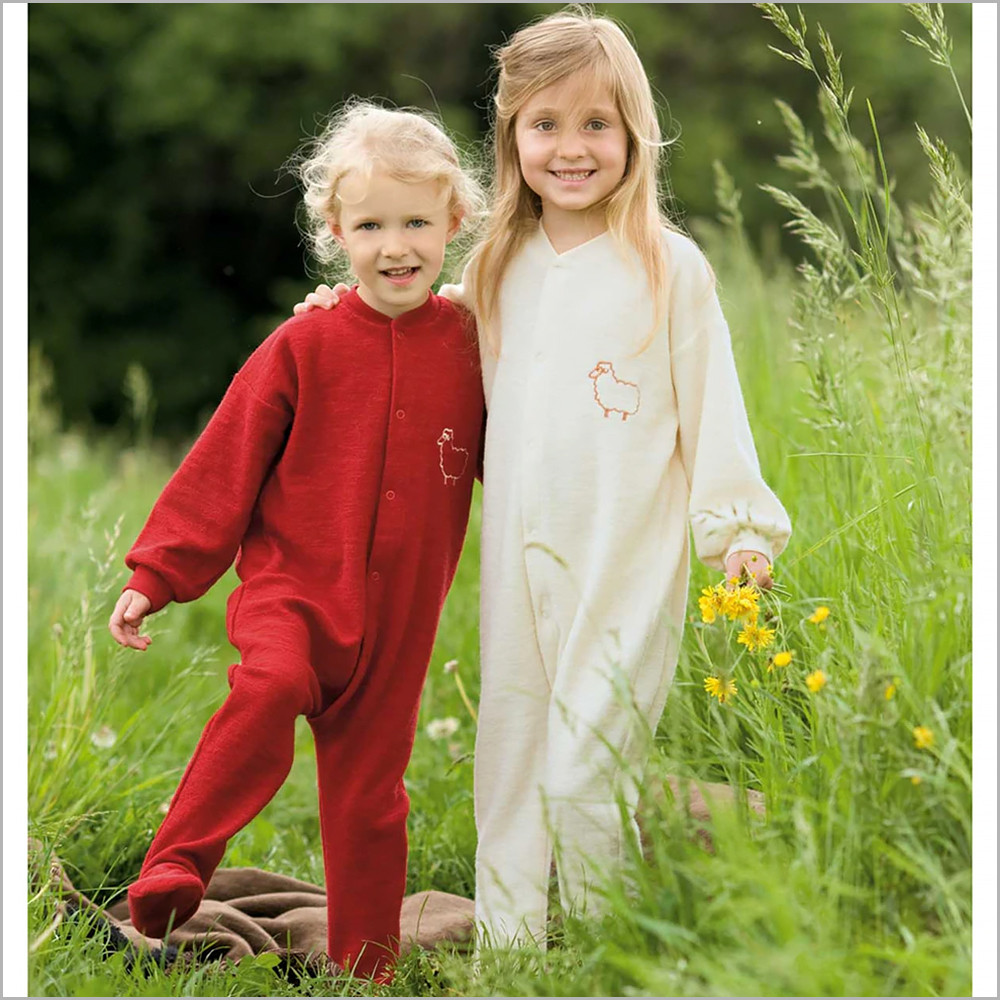
Engel Baby Footed Romper Pajama — 100% Organic Merino Wool Terry, Newborn to 4 Years
A one-piece long-sleeved baby pajama in soft, warm merino wool terry — knitted loops on the outside, slightly brushed and fluffy on the inside. Made in Germany by Engel, IVN BEST certified, with nickel-free snaps and integrated feet for cozy, blissful nights and naps.
A German natural fiber brand since 1927
Engel is a family-run textile manufacturer based in Pfullingen, southern Germany, producing natural fiber baby and children's clothing for nearly a century. The company works exclusively with certified organic merino wool from controlled organic livestock farming (kbT), organic mulberry silk, and organic cotton (kbA), and knits and sews most of its range in its own Pfullingen factory or in partner workshops within a 50 km radius.
Engel was one of the first European textile producers to be IVN BEST certified — the strictest natural-textile standard in the world. Roughly 95% of the Engel range carries either the GOTS or IVN BEST seal. The wool used for this pajama is sourced from kbT-certified farms in South America that follow strict animal-welfare standards and explicitly exclude mulesing. For parents seeking a genuine, traceable European wool brand for their baby, Engel is one of the most respected names in the category.
A warm wool pajama for naps, nights, and chilly mornings
The Engel footed terry pajama is designed for sleep and lounging in cool to cold conditions — typically a bedroom that runs 16–20°C (60–68°F), brisk autumn and winter days at home, and the transitional spring and fall mornings when one-piece warmth is exactly what a baby needs. The wool terry knit is warmer than Engel's lighter 200 gsm fine-rib bodysuits but less bulky than their boiled-wool outerwear, making it the right weight for indoor sleep in most homes through the cooler months.
Worn over a thin merino or organic cotton bodysuit, it works as a winter sleep layer in heated rooms; worn on its own, it's a complete cool-weather pajama. Because wool actively regulates temperature, parents don't have to worry about overheating the way they would with synthetic fleece sleepwear — the fiber releases heat as readily as it traps it. This is also why merino is recommended in safe-sleep guidance from many pediatric sources: it helps keep babies in a stable thermal range through the night.
Fiber, fabric, and weight
Fiber: 100% organic virgin merino wool
Pure, fully organic merino wool from kbT-certified sheep farms (kontrolliert biologische Tierhaltung — controlled organic animal husbandry, with strict welfare standards, no mulesing, and stress-free shearing). Engel's wool is sourced from South American farms participating in the Prolana program. Fine merino is significantly softer than the coarse wool many people remember from older garments and is the gentlest natural fiber for next-to-skin baby wear.
Fabric: terry knit, brushed inside
Wool terry (called Frottee in German) is a knit fabric with small loops on the outside — the same structure as a bath towel, but worked in fine merino. The inside is slightly brushed to a soft, fluffy hand that sits gently against baby's skin. This construction traps warm air efficiently while staying breathable, and gives the pajama a recognizable plush surface that's lovely to touch.
Fabric weight
Engel does not publish a precise gsm figure for this terry construction, but its position in the Engel lineup is clear: warmer and more substantial than their 200 gsm fine-rib merino bodysuits, lighter and less bulky than their 280 gsm wool fleece pieces. In practical terms, it's a true warm sleepwear weight — suitable for bedroom temperatures around 16–20°C (60–68°F) and cool indoor days.
Construction details
Continuous nickel-free snap button panel down the front and through the crotch for fast, fuss-free dressing and diaper changes. Integrated feet, soft ribbed cuffs at the wrists, long sleeves, classic crew neckline, and a small lamb motif on the chest. Made in Germany. IVN BEST certified.
Why merino wool works so well for baby sleepwear
Temperature-regulating
Merino fibers have a natural crimp that traps warm air, insulating against cold while still allowing heat to escape when the body warms up. Babies don't yet regulate their own temperature reliably, and wool buffers the gap — warm when cold, cool when warm. This is fundamentally different from synthetic fleece, which only insulates.
Moisture-wicking
Wool can absorb up to 30% of its weight in moisture before feeling damp, pulling perspiration and small spills away from skin and releasing them into the air. The pajama stays comfortable through sweaty sleep, drool, and the occasional minor leak.
Naturally odor-resistant
Lanolin in the wool fiber and the natural surface structure inhibit the bacteria that cause body and laundry odor. A merino pajama needs washing far less often than a cotton one — usually only when visibly soiled. Most of the time, airing it overnight is all it needs.
Soft and non-itchy
Fine merino is meaningfully different from the coarse wool of older garments. Combined with the slightly brushed terry interior, this is one of the softest wool fabrics made for baby skin. Most babies wear it without any irritation — a small minority of children are wool-sensitive regardless of fineness, but for the rest, this fabric is reliably gentle.
No harmful chemicals
IVN BEST is the world's strictest natural-textile certification. Dyes are free from heavy metals and AZO compounds, no chemical finishes are applied, and all snaps and trims are nickel-free. Engel guarantees no pre-wash is needed before first wear — the pajama is safe straight from the package.
Built to be passed down
A well-cared-for Engel wool pajama outlasts many children. The terry knit holds its shape, the natural fibers don't degrade or pill the way synthetic blends do, and small repairs are simple. Many EcoAble parents pass these pieces between siblings or to friends.
Baby size chart — by age and height
Engel uses European baby sizing based on the child's height in centimeters. Each size covers a range of heights and a corresponding age range. The most accurate way to size is by measuring your baby's height from head to toe; if you don't have a current measurement, use the age range as a guide.
| EU Size | Age | Height (cm) | Height (in) | Chest (cm) |
|---|---|---|---|---|
| 50/56 | Newborn – 3 months | 50–56 | 19.5–22 | 42–46 |
| 62/68 | 3–6 months | 62–68 | 24–27 | 44–48 |
| 74/80 | 6–12 months | 74–80 | 29–31 | 46–50 |
| 86/92 | 1–2 years | 86–92 | 34–36 | 48–52 |
| 98/104 | 2–4 years | 98–104 | 38.5–41 | 50–56 |
Who this works well for — and what to know
Works well for
Parents looking for genuine warmth in a natural fiber sleep layer, families heating their home to lower temperatures in winter, babies with sensitive skin or eczema who react to synthetic fabrics, parents who already know merino's temperature-regulating benefits, and anyone looking for an heirloom-quality baby shower or new-baby gift. Also excellent for cooler-climate families who want a pajama that handles the full autumn-through-spring range without layering or overheating.
Things to know before you buy
This is a premium European baby garment at premium European prices — justified by IVN BEST certification, German manufacturing, organic fibers, and a piece built to last through multiple children, but worth being honest about. For warm summer nights in a non-air-conditioned bedroom, this pajama will be too warm; a lighter wool/silk or organic cotton option is a better fit for those conditions. A small minority of babies are sensitive to wool of any micron count — if your child has reacted to wool before, start with a wool/silk blend, which is the gentlest option in Engel's lineup.
Care commitment
Wool needs cold-water hand wash or a delicate wool cycle, with wool wash detergent, and must be laid flat to dry — never tumble dried. Done correctly, this is genuinely simple, and wool needs washing far less often than cotton or synthetic. Done incorrectly — hot water, normal cycle, or tumble dry — wool felts and shrinks, and the pajama will be permanently damaged. There's no middle ground on this point. The good news: the routine is easy to learn, and the pajama only needs full washing every few wears.
How to wash and care for your Engel wool terry pajama
Wool naturally regenerates in fresh air. Most of the time, airing the pajama overnight is all it needs between wears — this is the most important habit to learn with merino. When washing is genuinely required, use the wool/delicate cycle on your machine at cold or maximum 30°C, with low spin speed (max 400 rpm), and a wool-specific detergent (Engel recommends Ulrichs lanolin wool wash; Eucalan or Sonett wool wash also work well).
If you prefer to hand wash, swish the pajama gently in lukewarm water — never scrub or wring. Squeeze water out by rolling in a clean towel, then lay flat on a fresh towel to dry, gently pulling the pajama back into shape while damp. Never tumble dry, never dry on a radiator, and always use the same water temperature throughout the wash. A light steam-iron can restore the fluffy terry texture if needed.
Engel guarantees that no pre-wash is needed before first wear. The IVN BEST and GOTS standards forbid harmful dyes, chemical finishes, and processing residues, so the pajama is safe straight from the package. Many parents do still wash it once before first wear out of habit — that's fine, just use the wool routine above.
Common questions about the Engel Baby Footed Wool Pajama
Is wool too warm for a baby to sleep in?
Is merino wool itchy against baby skin?
What is wool terry, and how is it different from regular wool?
What does IVN BEST certification mean?
How often do I need to wash a wool pajama?
Will this pajama shrink if I wash it wrong?
What size should I order if my baby is between sizes?
Why is this pajama more expensive than synthetic baby sleepwear?
Can babies wear wool pajamas in summer?
Additional Details
- Materials:
- 100% Organic Merino Wool Terry (IVN BEST Certified)
- Origin:
- Made in Germany