
How to wash cloth diapers
A reliable wash routine is the difference between clean, long-lasting diapers and leaks, stink, and premature wear. This guide walks through the four-step routine that works for almost every household, then adapts it for HE and non-HE machines.
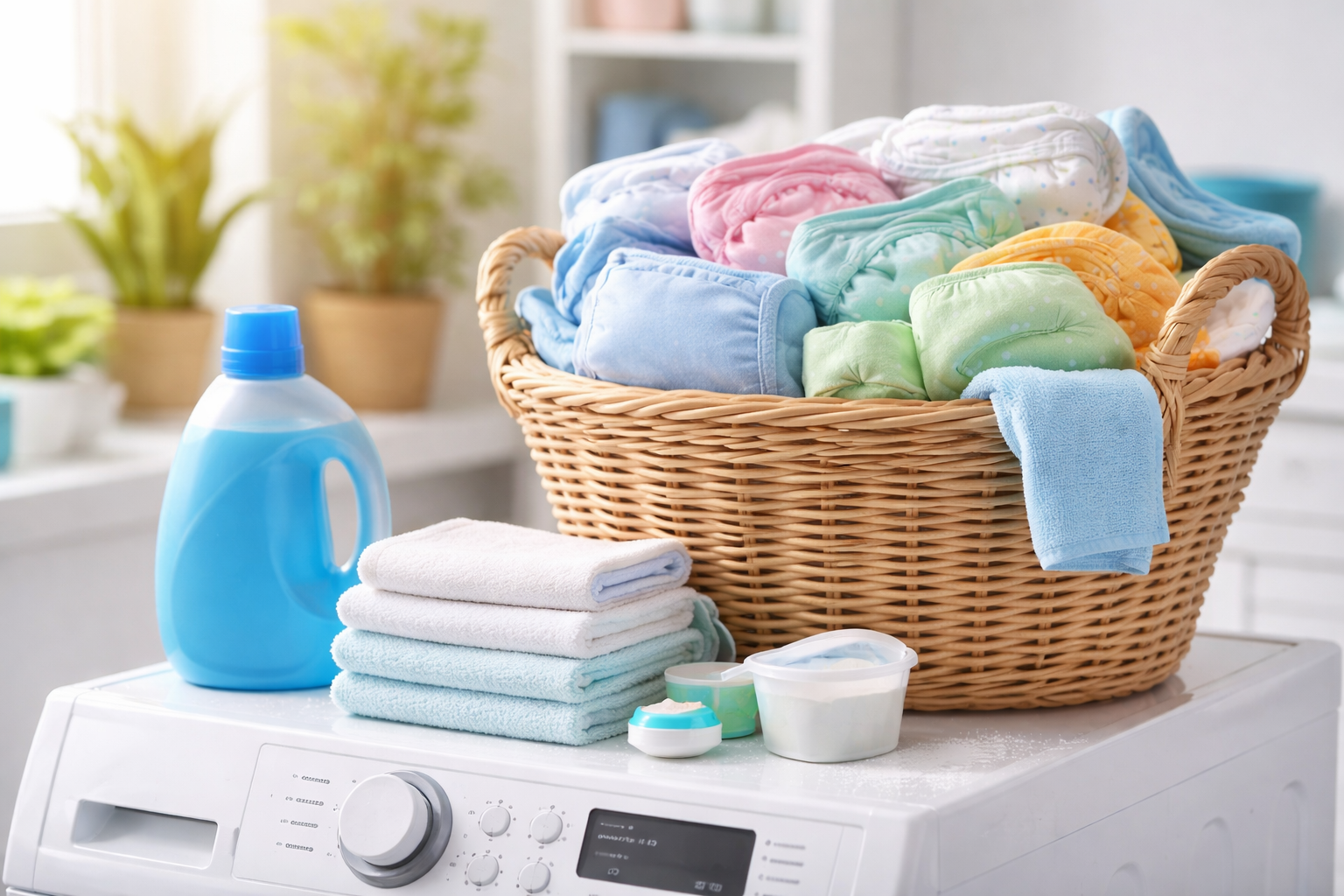
The short version: knock solids into the toilet, store in a dry pail, then wash every 2–3 days with a short prewash followed by a long, heavy-duty main wash. Use the full detergent dose for a heavily soiled load, and keep water temperature at or below 130°F (54°C) to protect PUL, microfiber, and bamboo. The rest of this page covers the details, the machine-specific settings, and what to do when things go wrong.
Before you start, make sure you're using a detergent that actually cleans diapers — many "gentle" or "free and clear" options don't. See our recommended detergents for cloth diapers and how much detergent to use. If your diapers are brand new, see how to prep cloth diapers before first use — natural fibers don't reach full absorbency until they've been washed several times.
Washing for older kids and adults — or for anyone managing heavier output, hemp-heavy stashes, or bowel incontinence — uses the same routine but with adjustments for load size, ammonia management, and pre-rinse strategy. See how to wash cloth diapers for older kids and adults for the full breakdown. If you don't have access to a washing machine — traveling, no laundry at home, or a temporary emergency — see how to hand wash cloth diapers.
The 4-step wash routine
This is the core routine. It works for baby, big kid, and adult cloth diapers, and for every fabric EcoAble sells — bamboo, hemp, cotton, microfiber, and PUL shells.
- Leave the pail lid slightly open for air circulation.
- Put Hook & Loop diapers in a mesh laundry bag, 4–5 per bag, to stop them snagging each other.
- Turn off any "auto prewash" or "extra rinse" setting — you're controlling those manually.
HE vs standard machines at a glance
Both machine types can wash cloth diapers well. The difference is in the settings you choose and how you load the drum.
| HE machine | Standard (non-HE) machine | |
|---|---|---|
| Prewash cycle | Quick Wash, Speed Wash, or Express (30–45 min) | Heavy Duty, Cotton, or Normal — at least 6 min of agitation |
| Main wash cycle | Heavy Duty, Whites, or Power Wash — longest, hottest available within safe temp | Heavy Duty, Power Wash, or Super Wash |
| Drum fill | 2/3 to 3/4 full — add small items to boost agitation | Full water level, fabric fully submerged |
| Detergent (prewash) | About line 1 or half a cap | About line 1 or half a cap |
| Detergent (main wash) | Full dose for heavily soiled load | Full dose — slightly more for plant-based or free & clear |
| Avoid | Rinse/Spin and built-in "Prewash" — not enough agitation | Delicate or quick-wash cycles — not enough time |
For specific dosing by detergent type and water hardness, see how much detergent for cloth diapers. For why agitation, detergent, and temperature have to work together — and what's actually happening inside the drum — see the science of washing cloth diapers.
Washing cloth diapers in an HE machine
Prewash
Choose a short cycle with agitation, 30–45 minutes. Look for Speed Wash, Quick Wash, or Express. If you're on a top-loading HE with low agitation, use Normal or Cottons instead.
Add a small amount of detergent — about line 1 on the cap, or roughly half a cap. Add water softener if you have hard water.
Skip the Rinse/Spin option and the machine's built-in "Prewash" setting. Neither provides enough agitation, and you can't add detergent properly between cycles.
Main wash
Fill the drum 2/3 to 3/4 full. This is the single biggest factor in cleaning performance — an underloaded drum can't agitate properly and leaves soil trapped in the fibers.
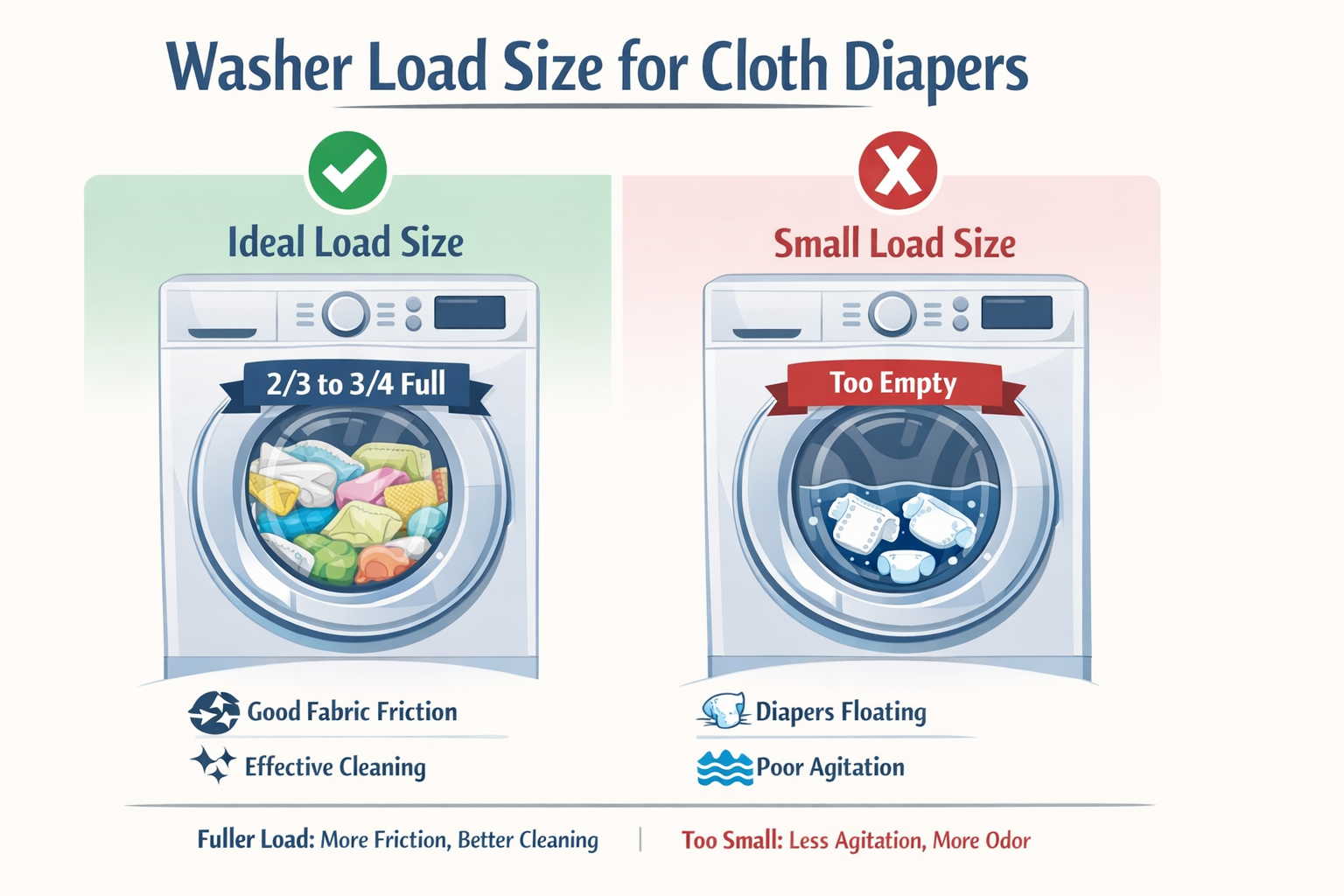
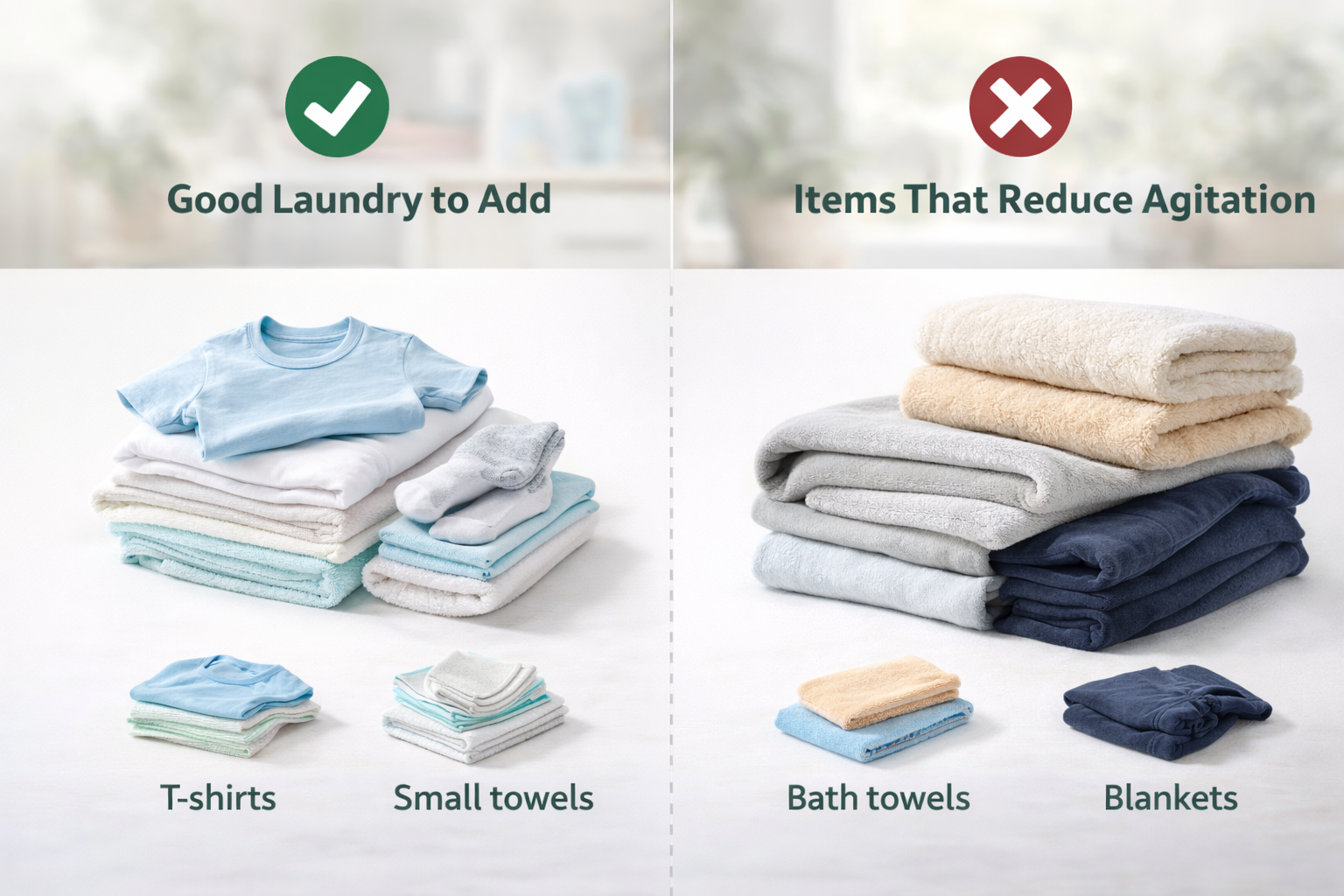
If you don't have enough diapers to hit that fill level, add small clothing items to boost agitation. Don't add large items — they'll wrap around the diapers and trap soil.
Choose the longest, most powerful cycle: Heavy Duty, Whites, or Power Wash. Set soil level and spin to maximum. If your machine has stain treatment or a "Boost" option, turn it on. Turn off auto prewash and extra rinse.
Use the full detergent dose recommended for a heavily soiled load, plus water softener if needed.
Washing cloth diapers in a standard (non-HE) machine
Prewash
Use a cycle with at least 6 minutes of agitation — Heavy Duty, Cotton, Normal, or Regular. Cold or warm water is fine. Add a small amount of detergent (about half a cap) and water softener if needed.
Main wash
Select the longest cycle with the strongest agitation. On most machines that's Heavy Duty, Power Wash, or Super Wash.
Water temperature depends on your detergent. Synthetic detergents clean well at any temperature. Plant-based detergents work better in warm water — see warm vs hot water for cloth diapers for the full breakdown.
Use the full detergent dose for heavily soiled loads. Increase slightly if you're using a free & clear or plant-based formula. Add water softener if needed.
Water temperature guide
Getting the temperature right is the single biggest factor in how long your diapers last. Hot water kills bacteria and lifts soil, but it also breaks down PUL laminate, microfiber, and bamboo fibers over time.
| Temperature | When to use it |
|---|---|
| Up to 90°F (32°C) — cold to warm | Standard wash temperature recommended by most manufacturers. Safe for PUL shells and all fabrics long-term. |
| Up to 130°F (54°C) — hot | Use occasionally — illness in the household, ammonia buildup, or as part of a monthly deep clean. Safe short-term but shortens fabric lifespan if used every wash. |
| Above 130°F (54°C) | Never. Will delaminate PUL shells and damage elastics. No diaper component is designed for this temperature. |
For more on when to use warm vs hot water, why the 130°F ceiling matters, and what HE machines actually deliver compared to their dial settings, see warm vs hot water for cloth diapers.
When something's wrong
If diapers come out smelling fine wet but develop a barnyard or ammonia smell once used, or start causing rashes, something in the routine is off. Use this table to figure out where to start.
If you've been washing for a while without a deep clean, a monthly stripping routine keeps diapers performing. See how to strip cloth diapers and how to sanitize without bleach. Stripping isn't a replacement for a solid wash routine — it's a reset for when the routine has been off.
Common questions
How often should I wash cloth diapers?
Can I use regular laundry detergent on cloth diapers?
Do I need to pre-rinse every diaper before the pail?
What do I do about poop?
Is hot water safe for cloth diapers?
Do I need a water softener?
Can I dry cloth diapers in the dryer?
What's stripping and when do I need to do it?
Can I wash diapers with regular laundry?
How do I wash cloth diapers for older kids or adults?
How do I wash cloth diapers when I'm traveling or don't have a washing machine?
Set up your wash routine
The wash routine guidelines on this page are for informational purposes only. EcoAble disclaims all liability for any loss or damage — direct, indirect, incidental, or consequential — resulting from the use of this information. It's your responsibility to follow settings appropriate for your washing machine and materials. EcoAble is not liable for any damage caused by washing machines, dryers, or misuse of our products. By using these guidelines, you acknowledge and agree to these terms.