
How much detergent for cloth diapers
If your diapers are smelly, leaking, or losing absorbency, the detergent dose is the first thing to check — and the answer is almost always "more than you've been using." Cloth diapers are heavily soiled laundry. They need real cleaning power, not the minimal doses some older cloth diaper guides recommend. This page gives practical pre-wash and main wash amounts by machine type, detergent type, and water hardness.
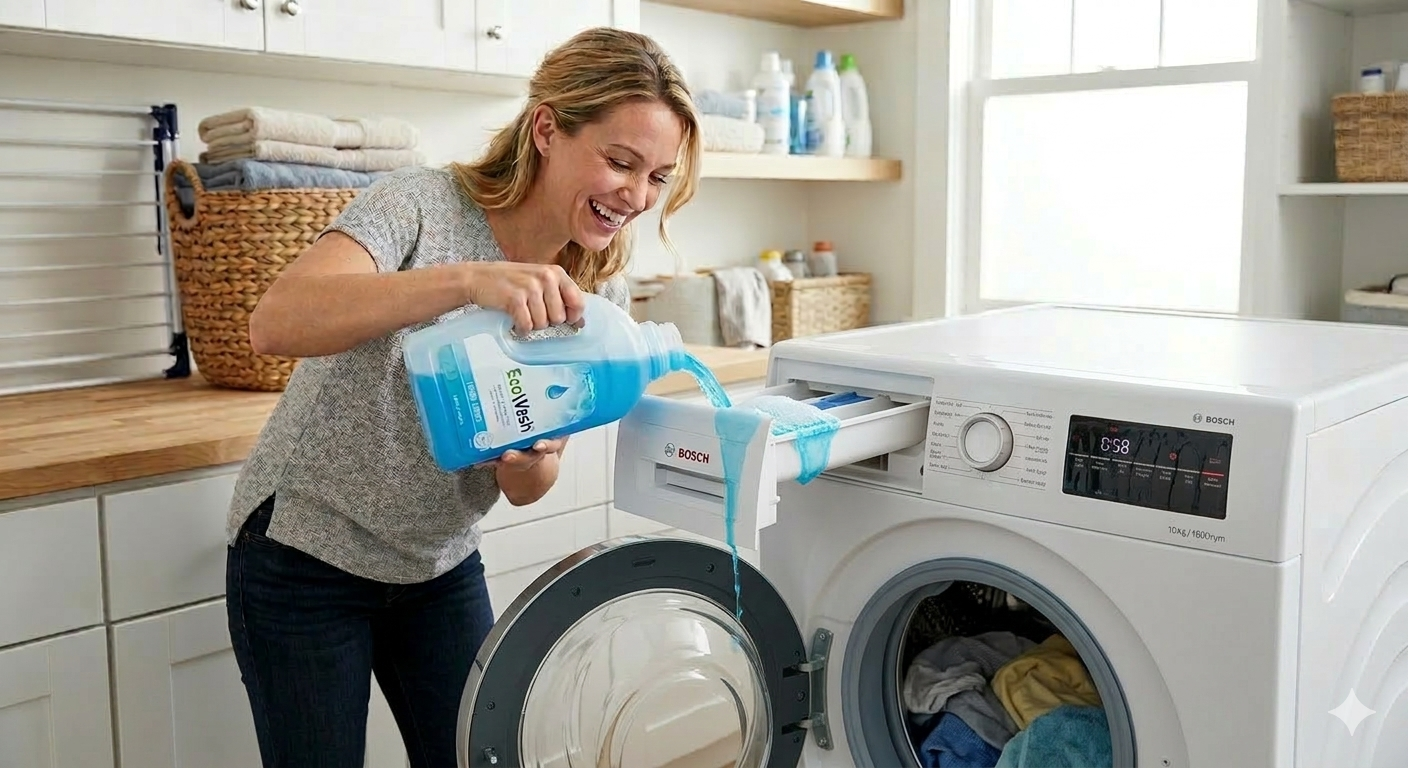
The short version: pre-wash with about half the manufacturer's recommended amount; main wash with the full heavily-soiled dose. Adjust up by 50% if you're using plant-based or "free & clear" detergent. Adjust up further if your water is hard. Adjust down only if you have very soft water or you're seeing suds in the final rinse.
Why cloth diapers need more detergent than you think
A lot of cloth diaper advice from the early 2000s recommended very low detergent doses — a teaspoon or two per wash — on the theory that any residue would build up in the absorbent fibers and reduce performance. That advice is largely wrong, and following it is the single most common reason cloth diapers develop ammonia smell, barnyard odor, and reduced absorbency.
Cloth diapers and reusable incontinence products carry a lot more soil than regular laundry. They contain:
- Urine salts
- Body oils
- Bacteria
- Organic residues from skin and waste
Modern detergents are designed to suspend that soil in wash water and rinse it away cleanly — provided there's enough detergent to do the job. Underdosing leaves soil trapped in the fibers, where it stays through the next use and produces the smell and absorbency problems that get blamed on "buildup." The buildup is real, but it's usually a buildup of under-cleaned soil, not a buildup of detergent.
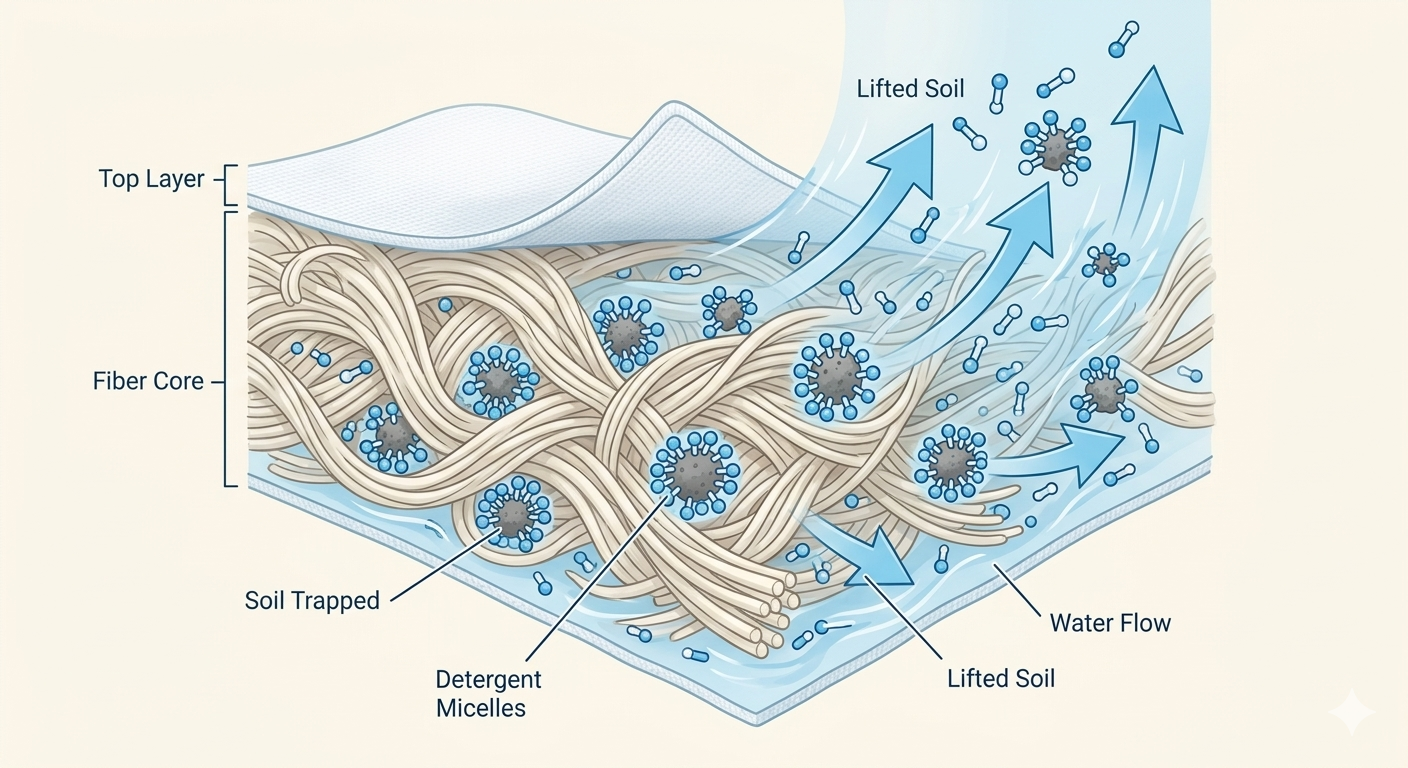
Detergent manufacturers print "heavily soiled" instructions on the back of the bottle for a reason. For cloth diapers, that's the line you're aiming for — not the standard load line.
Practical dosing — pre-wash and main wash
A cloth diaper wash routine has two cycles. Each gets a different amount of detergent.
| Pre-wash | Main wash | |
|---|---|---|
| Purpose | Lift surface soil and rinse it out before the deep clean | Deep-clean the absorbent layers |
| Liquid detergent (Tide-style cap) | Line 1, or about half a cap | Line 3, or the full cap up to the heavily-soiled line |
| Powder detergent | About half the standard scoop | Full scoop for heavily soiled load |
| Detergent strips/sheets | Half a strip | One full strip per heavily-soiled load |
| Water temperature | Cold or warm | Warm to hot (never above 130°F to protect PUL) |
| Cycle length | Short cycle with at least 6 minutes of agitation | Longest, strongest cycle — Heavy Duty, Whites, or Power Wash |
If you flip your detergent bottle over, most have separate dose lines for "regular," "heavily soiled," or "max load." Use the heavily-soiled line for the main wash. That's the dose the manufacturer designed for what cloth diapers actually contain.
For specific brand-by-brand dosage, our cloth diaper safe detergent list notes which brands need the standard dose and which need 1.5x.
Adjustments for detergent type and water hardness
The dosing in the table above is the starting point. Three things change the right number for your specific situation.
Plant-based or "free & clear" detergents need more
Plant-based detergents (Rockin' Green, Charlie's Soap, Seventh Generation, Molly's Suds, Method, Puracy) and most "free & clear" formulas have weaker enzyme and surfactant systems than mainline synthetics. They clean well, but they need about 1.5x the standard dose to do the job on cloth diapers. If you're using one of these and following the standard line, you're probably underdosing.
Hard water needs a softener, not more detergent
If you have hard water, your first instinct might be to use more detergent. Don't. The minerals in hard water bind to the detergent and reduce its cleaning power, so adding more detergent just leaves more residue stuck to your diapers. Add a water softener instead — Calgon or similar — about 1/4 cup for top loaders or 1–2 tablespoons for HE machines. With the water softened, your normal detergent dose works the way it's supposed to.
Heavy output situations need both
If you're washing for a heavy-wetting toddler, a child with bedwetting, or an adult using cloth for incontinence, the soil load per diaper is significantly higher than baby diapers. The volume is greater, the urine is more concentrated, and there's often more frequent bowel involvement. For these households:
- Use the full heavily-soiled main wash dose, never less
- Add a water softener even if your water is moderately hard
- Don't overload the drum — smaller, more frequent loads clean better than packed ones
- Wash every 2 days, not 3, to keep the soil-to-cleaning-power ratio manageable
There are only two reasons to use less than the standard dose: very soft water (under 60 ppm) where standard doses oversuds, or persistent suds in the final rinse indicating the rinse cycle isn't clearing detergent. In both cases, drop to about 75% of standard and adjust from there. Underdosing as a default is a trap that causes far more problems than it solves.
Signs you're using too little detergent
Underdosing is the more common error and produces a recognizable set of symptoms.
- Ammonia smell on a clean, dry diaper after the first use. The clearest sign. Bacteria survived the wash, and they reactivate the moment urine hits the fibers.
- Diapers smell fine when dry but stink when wet. Same root cause — bacteria in the absorbent core, dormant when dry, active when wet. See our guide on why cloth diapers stink.
- Diapers smell musty straight out of the dryer. Soil residue is still in the fibers and isn't fully rinsed out.
- Reduced absorbency. Residue coats the fibers and blocks them from absorbing as much liquid.
- Persistent diaper rash that doesn't respond to barrier cream. Ammonia and trapped bacteria irritate skin even before the smell is obvious to adults.
- Diapers that feel "off" — slightly stiff, slightly tacky, or not as soft as they were when new.
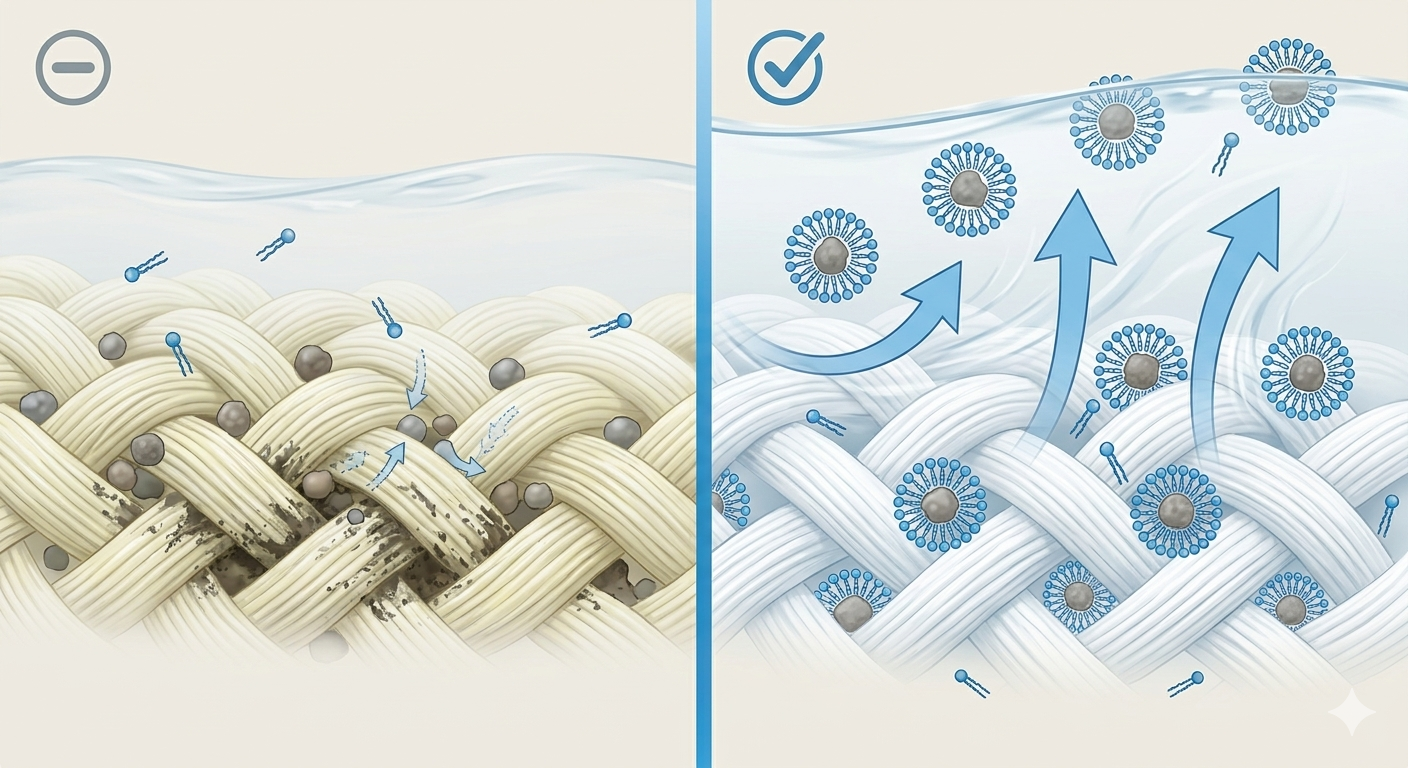
If you're seeing two or more of these signs, increase your main wash dose and run a strip + sanitize cycle to reset the diapers. Then maintain the new dose going forward. See our stink troubleshooting guide for the full reset process.
Signs you're using too much detergent
Overdosing is real but less common than underdosing. The signs are different and easier to spot.
- Suds in the final rinse water. Run an extra rinse with no detergent — if you see foam, your main wash isn't fully rinsing.
- Stiff, scratchy fabric out of the dryer. Detergent residue stiffens fibers.
- Skin irritation that improves when you reduce the dose. Detergent residue against skin can cause its own rash, distinct from ammonia rash.
- Repelling — water beads on the fabric instead of absorbing. Surfactant residue can coat fibers and block absorption. (Compression leaks have other causes too — see our leak troubleshooting guide.)
If you're seeing these signs, drop the main wash dose by about 25% and run an extra rinse for a few cycles to clear the residue. If repelling is severe, a one-time strip wash will reset the fabric.
Why detergent alone isn't the whole story
Detergent is one of three things that have to be right for cloth diapers to wash clean:
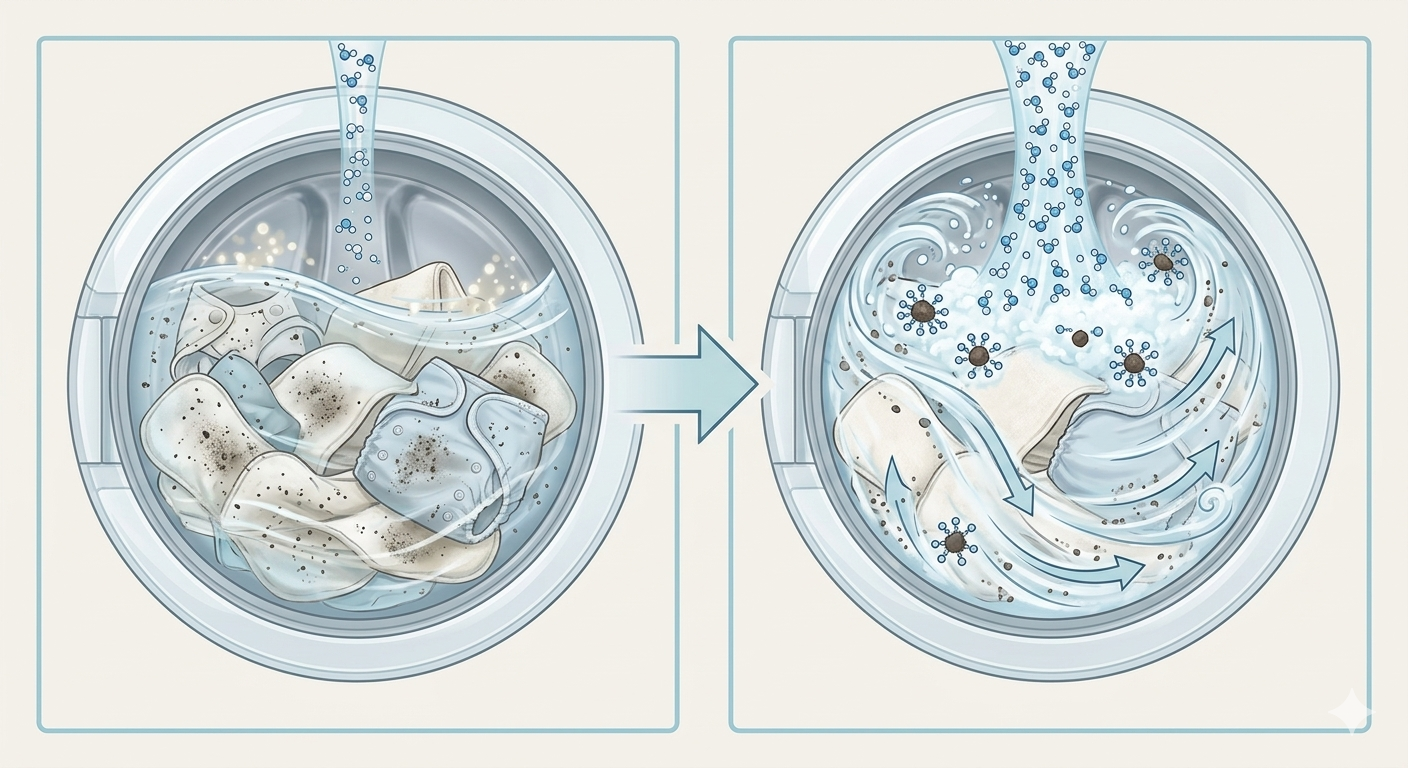
If your detergent dose is right but your loads are too small or your cycle is too short, you'll still see odor problems. The full cloth diaper wash routine guide covers HE and standard machine settings, load size, and cycle selection.
Common questions
How much detergent should I use for cloth diapers?
Do cloth diapers need a special detergent?
Will too much detergent damage my diapers?
Can I use less detergent if I have soft water?
Why did my old cloth diaper guide tell me to use a tiny amount of detergent?
Should I use detergent in the pre-wash, or just water?
My detergent is 4x or "ultra concentrated" — do I still use the heavily-soiled dose?
How much detergent for adult cloth diapers vs baby cloth diapers?
My detergent has pods or packs — how many should I use?
Related guides
Still not sure how much to use for your specific detergent or machine? Contact us with your detergent brand, machine type, and water hardness, and we'll help you dial in the right dose.