
Why Do Cloth Diapers Start to Smell? (And How to Fix It)
Clean cloth diapers shouldn't smell. Not out of the wash, not after the first use, not in the drawer. If yours do, something in your wash routine is off — and it's almost always one of two distinct problems. This guide walks through how to tell them apart, how to fix them, and how to stop them coming back. Applies to baby, kid, and adult cloth diapers.
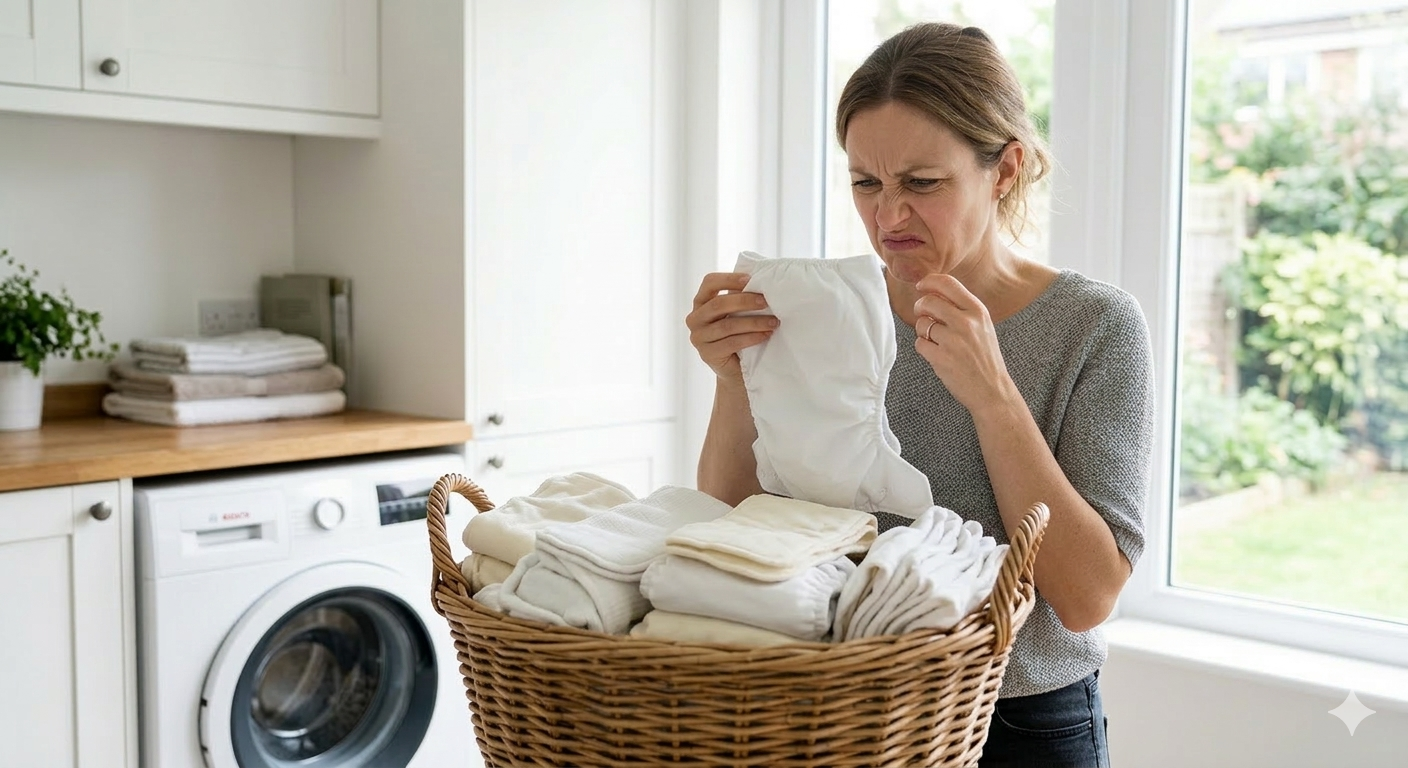
The short version: if diapers smell like ammonia (sharp, chemical, like cat urine), you have bacteria buildup from not enough cleaning power. If diapers smell like a barnyard (musty, sour, like manure) straight out of the wash, you have detergent or mineral buildup. Both are fixed with the same four-step process — wash, strip, sanitize, then adjust your routine so it doesn't come back. Both also commonly cause diaper rash that won't clear up.
Diagnose: ammonia or barnyard?
The smell tells you the cause. Match what you're smelling to one of the two columns below — the fix is similar for both, but knowing which you have helps you adjust your routine correctly afterward.
| Ammonia smell | Barnyard smell | |
|---|---|---|
| What it smells like | Sharp, chemical, like cat urine or strong window cleaner | Musty, sour, like manure or a wet barn |
| When you notice it | Right after first use, or even on clean-looking diapers | Straight out of the wash or dryer |
| How it changes with use | Gets much stronger after the diaper is used | Present from the moment the diaper is dry, regardless of use |
| Skin impact | Persistent diaper rash; can cause chemical-like burns if left untreated | Persistent diaper rash; skin irritation from detergent residue |
| Root cause | Bacteria living in the fibers | Detergent or mineral buildup coating the fibers |
If a diaper already smells like ammonia before it's used, the skin contact during wear is concentrated enough to cause chemical-like burns, especially on babies and on sensitive adult skin. If you're seeing red, raw patches that look like mild burns rather than typical rash — stop using those diapers until you've stripped, sanitized, and confirmed the smell is gone.
What if it only smells when wet?
A common pattern: diapers smell completely fine straight out of the dryer, but as soon as your child or you uses one and it gets wet, the smell comes roaring back. This is one of the most diagnostic clues you can get — it almost always points to ammonia rather than barnyard.
Here's why. Bacteria from previous uses are still living in the absorbent fibers, but in dry fabric they're dormant and don't produce odor. The moment moisture hits the fibers, the bacteria reactivate and start breaking down whatever urea is now in the diaper, producing ammonia almost immediately. The diaper hasn't suddenly become dirty — it was never fully cleaned in the first place. The previous wash removed surface soil but left bacteria deep in the absorbent core.
If this matches your situation, you can skip ahead to the ammonia cause and follow the fix from there. The wet-when-smelly pattern is a clear signal that strip-and-sanitize is needed, not just a wash routine tweak.
What causes ammonia smell
Urine is nearly odorless when fresh. Ammonia is what forms when bacteria break down urea in urine — it happens naturally in dirty diapers over a few hours, which is why the pail smells. The problem is when that ammonia smell comes back on a clean, dry diaper after the next use. That means bacteria are living in the fibers of the diaper itself, surviving the wash, and immediately acting on the next wetting.
Bacteria survive the wash when:
- There isn't enough detergent to fully clean the load
- The wash cycle is too short or doesn't have enough agitation
- Water temperature is too low to kill bacteria
- The drum is overloaded, so diapers don't agitate against each other
- Diapers sit too long between washes and bacteria colonize deeper into the fibers
Heavy output — toddlers holding urine longer between pees, or adults with heavier incontinence — accelerates the problem. More urine = more ammonia = a bigger cleaning challenge for the wash cycle to keep up with.
How residue causes odor
Both ammonia and barnyard smells come from the same underlying problem: residue trapped inside the absorbent fibers. What differs is what kind of residue, and where it came from.
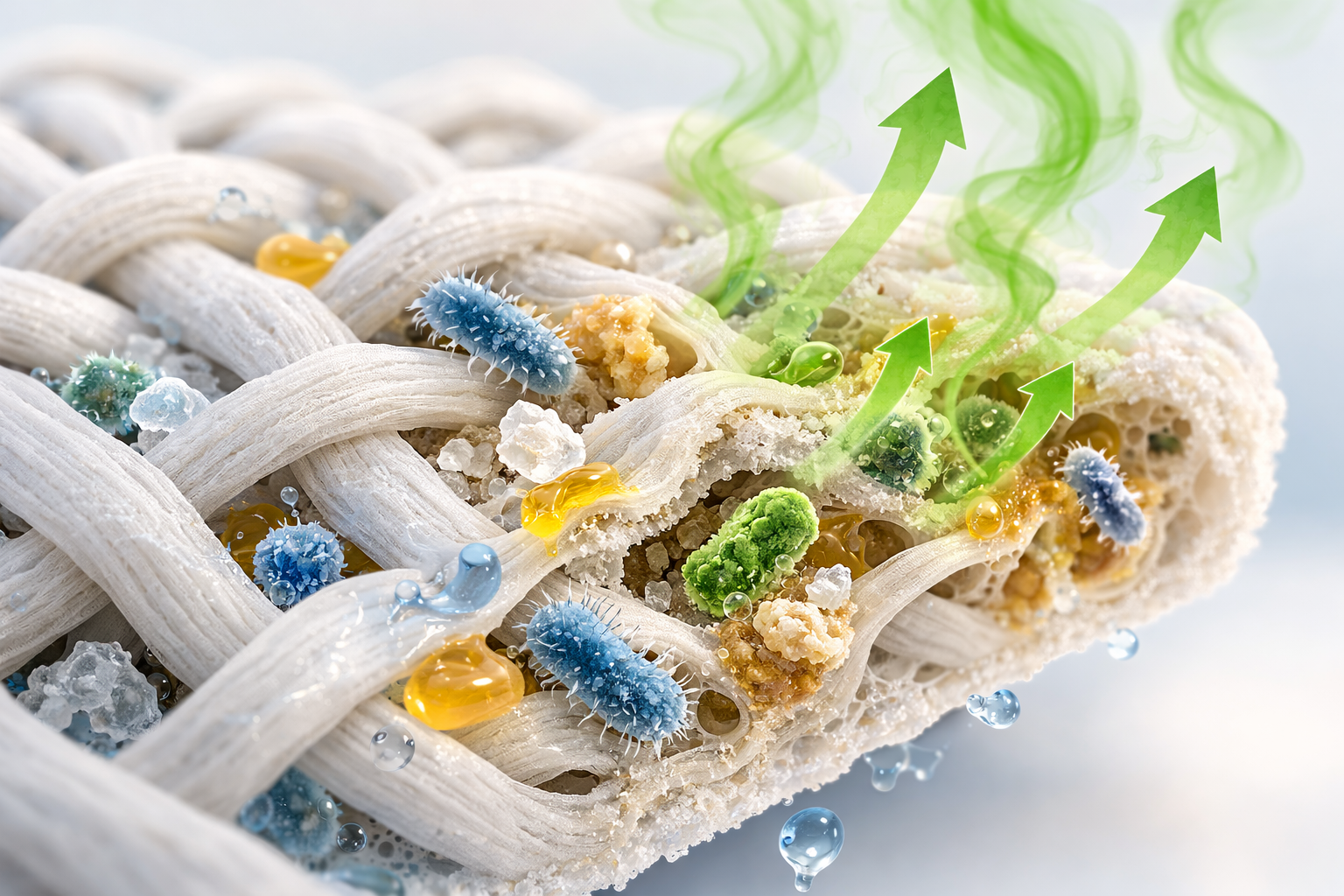
Cloth diapers and reusable incontinence products absorb much heavier soils than regular laundry. The fibers that make hemp, bamboo, and cotton so good at holding liquid are the same fibers that hold onto urine salts, body oils, bacteria, and organic compounds when the wash cycle isn't strong enough to flush them out.
When residue stays in the absorbent core:
- Ammonia smell develops because bacteria living on the residue continue to break down urea every time the diaper gets wet again.
- Barnyard smell develops because the residue itself — detergent buildup, mineral deposits, or organic soil — is what's smelling. No active bacteria needed.
This is why both problems respond to the same first move: a deep strip-wash that pulls the residue out of the fibers. Once the fibers are genuinely clean, ammonia bacteria have nothing to feed on, and barnyard residue has nothing left to give off odor.
What causes barnyard smell
Barnyard smell is the opposite of an under-cleaning problem — it's usually too much detergent or the wrong kind, leaving residue that can't be rinsed clean. That residue then traps moisture and soil in the fibers, which smells when the fabric dries.
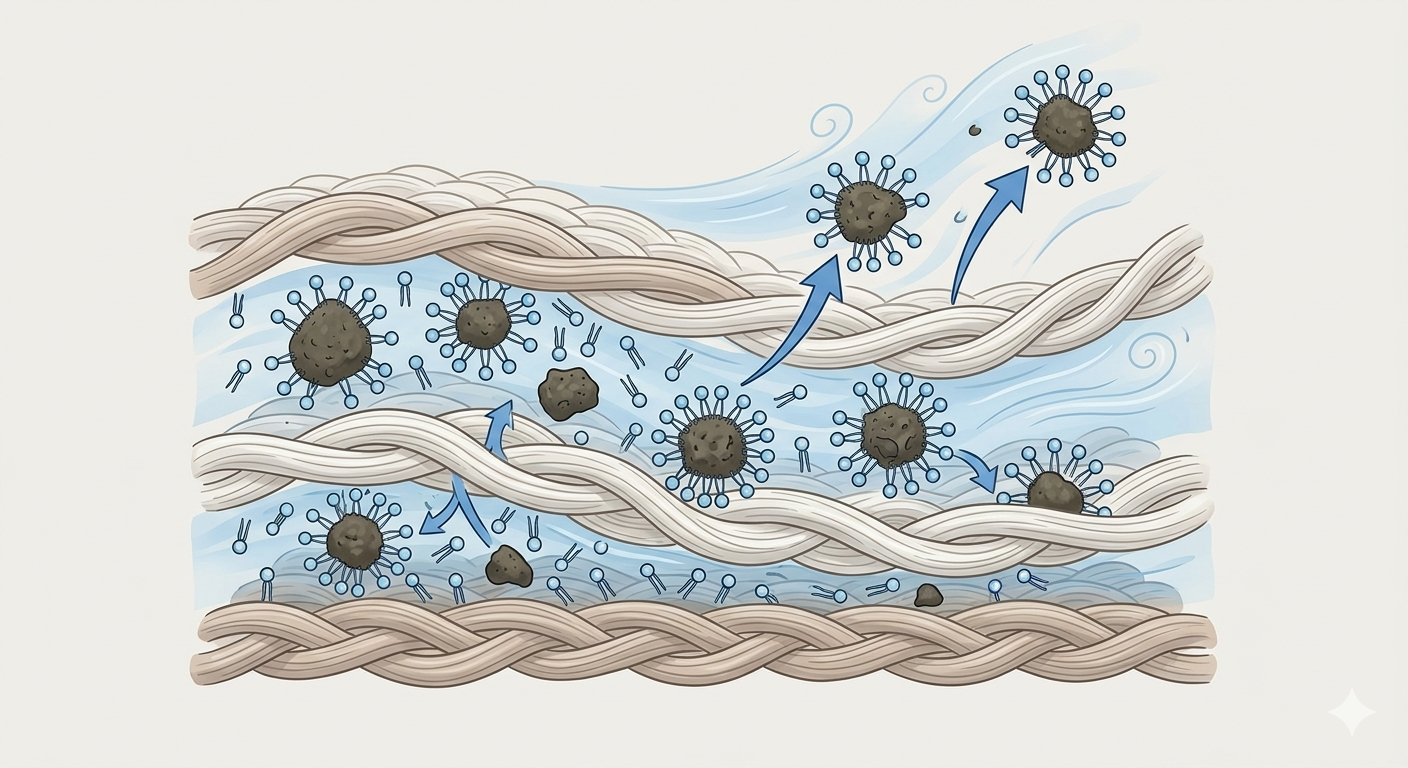
The most common causes:
- Too much detergent. Residue can't rinse fully in HE machines, especially.
- Hard water without a softener. Minerals bind to detergent, leaving a film on fabric that traps odor.
- The wrong detergent. Formulas with optical brighteners, heavy fragrance, or fabric softener leave residue that doesn't rinse out. See cloth diaper safe detergents.
- Infrequent washes — diapers sitting in the pail for 4+ days start to develop microbial buildup that washing alone can't clear.
- Overloaded machine — when diapers can't fully agitate or rinse, residue from both urine and detergent stays behind.
The 4-step fix for stinky diapers
The process is the same for both ammonia and barnyard smells. The adjustments you make afterward are what differ.
Skipping a step is the main reason the smell comes back. Sanitizing without stripping leaves buildup in the fibers; stripping without sanitizing leaves bacteria; fixing neither and just changing the wash routine usually isn't enough to clear an entrenched problem.
Keep the smell from coming back
The fix above gets rid of the current problem. The adjustments below keep it from being the current problem a month from now. Match the adjustment to which smell you had.
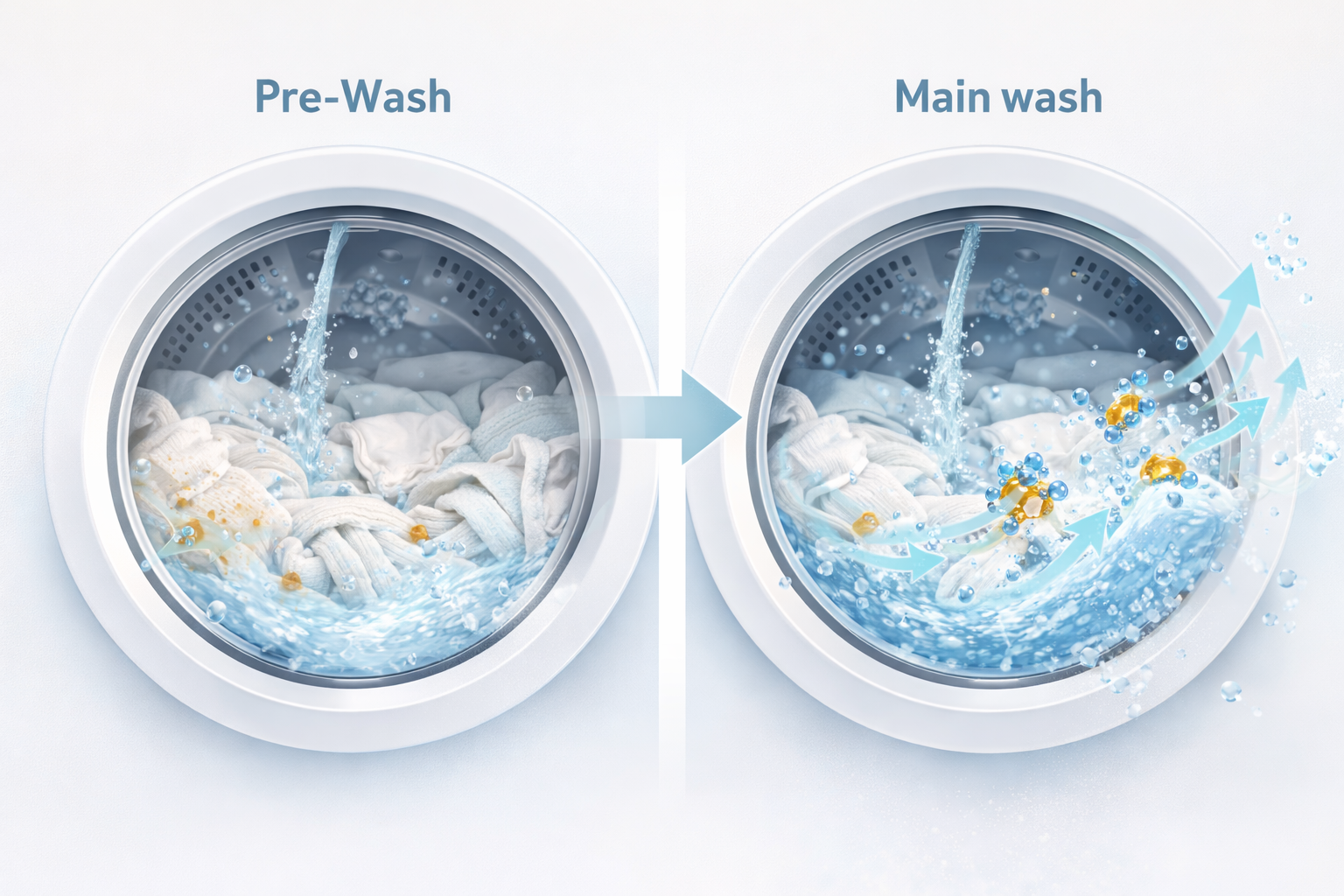
If you had ammonia smell (not enough cleaning)
- Increase the detergent dose. Use the full "heavily soiled" amount. If you're using plant-based detergent, go up 50% from the standard dose.
- Run a longer, hotter main wash. Heavy Duty, Whites, or Power Wash — whatever the longest and warmest option is on your machine. See the wash routine guide.
- Don't overload the drum. Two-thirds to three-quarters full in HE, fully submerged in standard. If you're maxing out your machine, wash more often in smaller loads.
- Wash every 2 days instead of 3. Especially for heavy-output situations — adults with higher incontinence output, big kids overnight, or toddlers in a heavy-wetter phase.
- Consider a water softener. Soft water lets detergent work more effectively, which solves ammonia smell at the root.
If you had barnyard smell (too much residue)
- Cut back on detergent slightly. If you're oversudsing, you're using too much for your water. Try 75% of your current dose.
- Add a water softener every wash if you have hard water. Calgon or similar — 1/4 cup for top loaders, 1–2 tablespoons for HE. Minerals are a major cause of barnyard smell.
- Switch detergents if yours has fabric softener, optical brighteners, or heavy fragrance. Check the detergent list.
- Add an extra rinse at the end of the main wash. Just until the water runs clear with no suds.
- Watch how you store soiled diapers. A breathable dry pail, washed every 2–3 days, prevents the buildup that shows up as barnyard after the wash.
Common questions
Why do my cloth diapers smell fine when dry but stink when they get wet?
How do I tell ammonia from barnyard if I'm not sure?
Why do my adult cloth diapers smell worse than my baby's did?
My diapers smell fine but my baby is getting a rash. Could the diapers still be the cause?
How often should I strip my diapers as prevention?
Will vinegar help with the smell?
My machine has a pre-rinse setting — should I use it?
Can the diaper pail itself cause smells on clean diapers?
How long before I know if the fix worked?
Could it be the diapers themselves — bad materials?
Work through the fix
If you've worked through the fix and the smell persists, contact us — we're happy to help troubleshoot. Include details about your water type, detergent, machine type, and how the smell presents (fresh out of wash vs after use) and we can usually pinpoint what's going wrong.