
How to strip cloth diapers
Stripping is a deep-clean soak that removes mineral and detergent buildup from cloth diapers. Done right, it restores absorbency and kills the smells that regular washing can't fix. Done too often or for the wrong reason, it shortens diaper life. This guide covers when stripping actually helps, how to do it in five steps, and what solution to use.
The short version: if your diapers are repelling (leaks even though the absorbent is dry) or you have persistent ammonia or barnyard smells, strip them by soaking clean diapers in hot water with RLR or a DIY solution of washing soda, borax, and Calgon for 4–6 hours, then run a water-only rinse cycle. With a proper wash routine and a cloth diaper safe detergent, you may never need to strip at all.
When to strip cloth diapers
Stripping isn't a routine step. It's a reset for when buildup has reached the point that regular washing can't clear it. If you're stripping more than every few months, your wash routine or detergent needs adjusting — stripping over and over wears out elastics and PUL without solving the underlying problem.
If buildup keeps coming back, stripping treats the symptom. The underlying fix is usually one of three things: more detergent, a water softener for hard water, or switching off a detergent with fabric softener or optical brighteners in it. See the detergent list for safe options.
How to strip cloth diapers in 5 steps
Stripping is a long hot-water soak. You'll need a bathtub, a top-loading washing machine, or a large plastic container, plus your chosen stripping solution. Plan for 4–6 hours plus a rinse cycle.
Don't soak longer than 8 hours — extended soaking damages PUL and elastics. Don't use water hotter than 130°F (54°C). Don't skip the water-only rinse cycle; any stripping solution left in the fibers will irritate skin.
Stripping solutions: RLR vs DIY
Both options work. RLR is simpler and pre-measured. The DIY mix is cheaper and gives you three ingredients you can reuse as laundry boosters after. Most people pick based on whether they want convenience or value.
| RLR Laundry Treatment | DIY stripping mix |
|---|---|
| One pre-measured 1.35 oz packet per session | 3 Tbsp washing soda + 3 Tbsp borax + 3 Tbsp Calgon |
| Designed specifically for fabric buildup | General laundry ingredients that double as boosters |
| Available on Amazon and cloth diaper retailers | All three available in the Walmart laundry aisle |
| Higher per-use cost | Lower per-use cost; ingredients last many sessions |
| Manufacturer-approved by most cloth diaper brands | Safe with all common fabric types used in cloth diapers |
RLR Laundry Treatment
Use one full 1.35 oz packet per stripping session. Dissolve in the hot water before adding diapers. For major buildup, a second session may be needed — don't double up the RLR in a single soak.
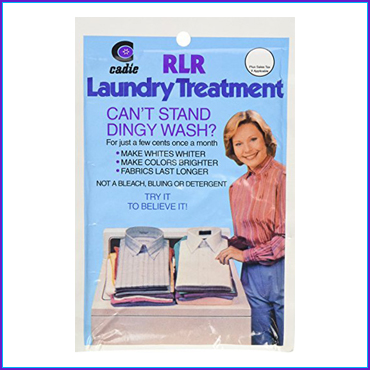
Most cloth diaper manufacturers approve RLR but don't recommend long soaks. Stick to 4–6 hours. You don't need RLR as part of a regular wash routine — use it once a month at most, or only when buildup appears.
DIY stripping mix
Per stripping session:
- 3 tablespoons washing soda
- 3 tablespoons borax
- 3 tablespoons Calgon
All three ingredients are sold in the Walmart laundry aisle. If you can only get two of the three, use 1/4 cup of each of the two you have. If you can only get one, use 1/2 cup. All three together gives the best results.
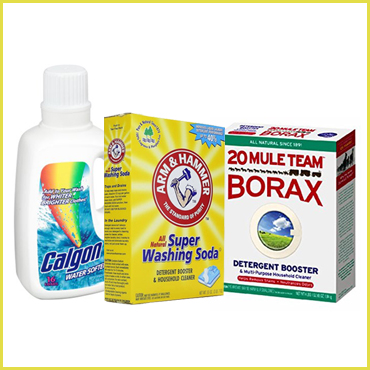
After stripping, the leftover washing soda, borax, and Calgon can all be used as laundry boosters in future washes. Washing soda and borax help break down buildup; Calgon softens hard water.
What to do after stripping
Stripping removes buildup but doesn't kill bacteria. If you stripped to deal with ammonia or you bought the diapers used, sanitize after stripping using our no-bleach sanitizing method or a diluted bleach soak.
Then, before your next regular wash, adjust whatever caused the buildup in the first place:
- Hard water? Add a water softener (Calgon) to every main wash from now on.
- Weak detergent? Switch to a stronger formula or increase the dose by 50%.
- Accidental fabric softener? Make sure nothing with softener goes in the diaper wash — check dryer sheets, too.
- Not enough agitation? Review the wash routine guide for cycle and drum-loading adjustments.
Common questions
How often should I strip cloth diapers?
Can I strip in a front-loading HE washing machine?
Can I strip brand-new cloth diapers?
Will stripping damage my diapers?
What's the difference between stripping and sanitizing?
Can I use Dawn dish soap or vinegar to strip?
The water turned brown during my soak — is that normal?
Do I need to strip if I just got used diapers from a friend?
Prevent the need to strip again
The stripping guidelines on this page are for informational purposes only. EcoAble disclaims all liability for any damage to diapers or property resulting from the use of this information. Always check manufacturer care instructions for your specific diapers, test on a single item first when trying a new method, and never exceed 130°F (54°C) water temperature or 8 hours of soaking.