How to sanitize cloth diapers without bleach
Sanitizing kills bacteria, yeast, and fungi on cloth diapers — it's a separate step from regular washing or stripping. Bleach works, but it's harsher on fabric and skin than needed for most situations. This guide covers three bleach-free sanitizing methods, when each one is the right choice, and when bleach is still the better option.
The short version: for routine sanitizing after stripping or for a mild ammonia issue, soak in hydrogen peroxide and borax for 30 minutes. For stronger disinfection without bleach, use Lysol Concentrate. If your washing machine has a Sanitize cycle, that works too — just don't use it every wash. For used diapers or active yeast infections, bleach is still the most reliable choice; see our bleaching guide.
Always start with clean diapers — sanitizing works on clean fabric, not soiled fabric.
When to sanitize cloth diapers
Most households don't need to sanitize on a schedule. A proper wash routine with a cloth-diaper-safe detergent keeps diapers clean enough for daily use. Sanitize when there's a specific reason to.
Sanitizing dirty diapers sets stains and leaves the underlying soil in place. Run a normal wash cycle first. Straight out of the washer is perfect.
Hydrogen peroxide & borax
The gentlest effective option, and the one that works for most sanitizing situations. Uses ingredients you can buy at any pharmacy and grocery store.
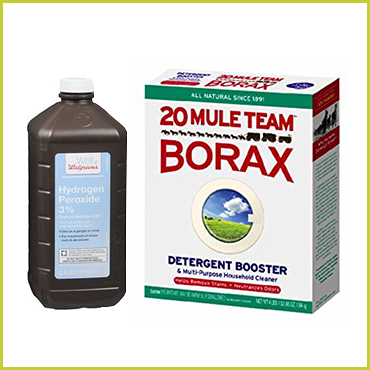
Hydrogen peroxide is sold in brown bottles at any pharmacy — 3% strength is what you want. Borax is in the laundry aisle at most grocery and big-box stores. Like bleach, hydrogen peroxide can fade bright colors and prints over time, so use it sparingly on patterned diapers.
Lysol Concentrate Disinfectant
Stronger than peroxide and widely used in hospitals and nursing homes. Use this when you need reliable disinfection but still want to avoid bleach.
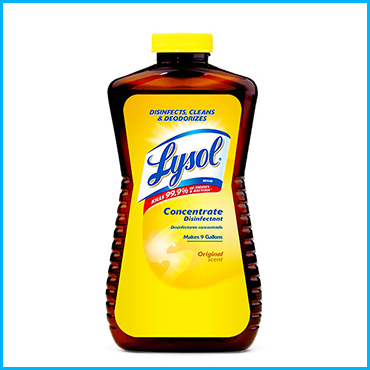
Lysol Concentrate Disinfectant (the brown bottle) kills 99.9% of germs including flu viruses and is commonly used for medical laundry. It can be harder to find in stores than regular Lysol spray — Amazon and restaurant supply shops are reliable sources. Diapers may smell faintly of Lysol after one wash; a second wash usually clears it.
Your washing machine's sanitize cycle
Many HE machines include a Sanitize or 90°C cycle that uses very hot water (typically 165–170°F / 74–77°C) to kill bacteria. No additives required. If your machine has this cycle and it's working properly, it will sanitize your diapers on its own.
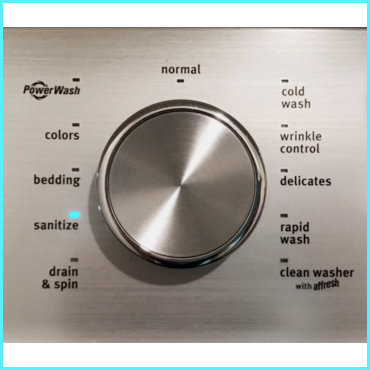
An occasional sanitize cycle won't hurt your diapers. Repeated use will. Temperatures above 130°F (54°C) wear down PUL laminate, elastics, and bamboo fibers noticeably faster than normal wash temperatures. Save this for actual sanitizing needs — not for routine washes.
Dealing with yeast or fungal infections
Yeast and thrush are the hardest things to clear out of cloth diapers, and bleach is the most reliable answer. If you can't use bleach due to sensitivities, the methods above work — but they need to be repeated.
For an active infection:
- Do a full soak (Method 1 or Method 2) to start.
- In every wash going forward, add an extra sanitizing rinse at the end using the same ingredients — 4 cups hydrogen peroxide + 1 cup borax, or 1 cup Lysol Concentrate — this time along with detergent.
- Continue the extra sanitizing cycle every wash until the infection is fully cleared. Stopping too early is the main reason yeast comes back.
If the infection doesn't clear after a few weeks of this, switch to bleach. Lingering yeast will keep reinfecting the baby, and no amount of gentle sanitizing will beat it.
Common questions
How often should I sanitize cloth diapers?
What's the difference between sanitizing and stripping?
Is hydrogen peroxide safe for PUL shells and elastics?
Can I use vinegar to sanitize cloth diapers?
Will sanitizing fade my diapers?
My washing machine doesn't have a sanitize cycle — what should I use?
Can I combine two methods in one soak?
I have pre-loved diapers — should I sanitize or bleach?
Keep diapers clean long-term
The sanitizing guidelines on this page are for informational purposes only. EcoAble disclaims all liability for any damage or skin reactions resulting from the use of this information. Always check manufacturer care instructions, test on a single item first when trying a new method, and never mix sanitizing chemicals (peroxide, Lysol, bleach) in the same soak.