
Warm vs hot water for cloth diapers
Warm water cleans most cloth diapers most of the time. Hot water has specific jobs — smell troubleshooting, illness, ammonia reset — but using it as your default wears out elastics and PUL faster than necessary. This page explains when each is right, what temperature actually means inside your machine, and the ceiling you should never cross.
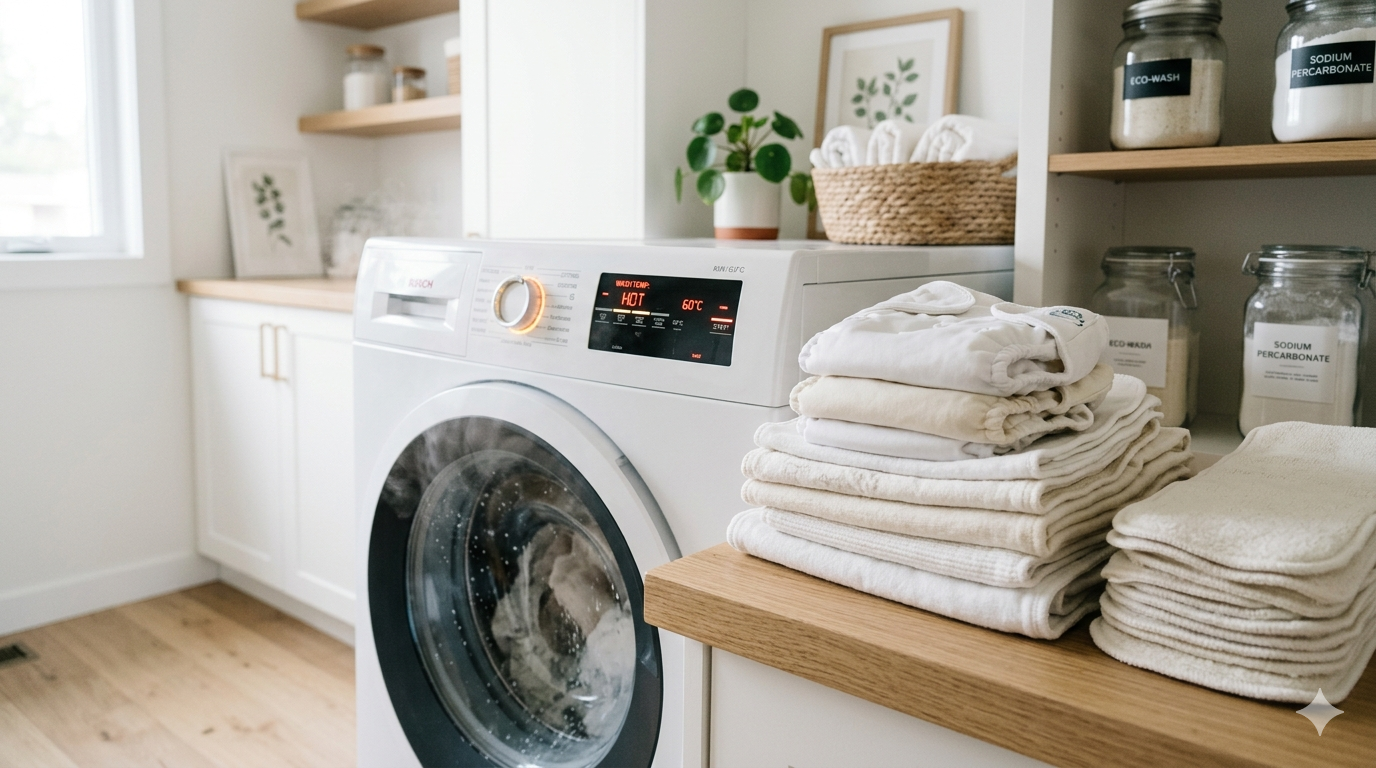
The short version: warm water (90–110°F / 32–43°C) for everyday washing, hot water (120–130°F / 49–54°C) when troubleshooting odor, ammonia, or illness. Never above 130°F — PUL waterproof layers, elastics, and snaps degrade above that ceiling, and hotter water doesn't clean better; it just damages diapers faster. Temperature works alongside detergent and agitation, not instead of them.
What temperature should you wash cloth diapers at?
For everyday cloth diaper washing, warm water in the 90–110°F range is the right starting point. It dissolves urine salts and body oils well enough to let detergent lift them out of the absorbent fibers, while staying gentle enough to preserve PUL waterproof layers, elastics, and snaps for the long life these products are designed for.
Hot water up to 130°F (54°C) has a place — it speeds up oil and residue breakdown when you're dealing with smell or buildup — but it's a tool for specific situations, not your default setting. Running every load on hot is one of the most common reasons cloth diapers wear out before they should.
Cold water has limited use. It can work for the pre-wash on standard machines if your detergent is rated for cold, but most main washes need at least warm water to do the cleaning job properly. Cold-only routines tend to produce the slow buildup of soil that turns into odor problems six months later.
Temperature by situation
Match the temperature to what the wash is actually trying to do.
| Pre-wash | Main wash | |
|---|---|---|
| Everyday washing | Cold or warm | Warm (90–110°F) |
| Diapers smell or have ammonia | Warm | Hot (120–130°F) |
| Stripping or sanitizing | Warm | Hot (130°F max) |
| Illness in the household (stomach bug, yeast, etc.) | Warm | Hot (120–130°F) plus a sanitize step |
| Hard water | Warm + softener | Warm (90–110°F) + softener |
| Adult / heavy output cloth diapers | Warm | Warm to hot (100–120°F) |
| Plant-based detergent | Warm | Warm to hot (100–120°F) |
If you've fixed an ammonia problem by switching to hot water, that's working — but the underlying issue (usually detergent dose or load size) hasn't been fixed. Once the smell is cleared, drop back to warm and adjust the rest of the routine. Otherwise you're using hot water to compensate for a wash routine that needs fixing, and the long-term cost shows up in worn-out elastics.
The 130°F ceiling — why hotter isn't better
130°F (54°C) is the upper safe limit for cloth diapers. Above that:
- PUL waterproof laminate begins to delaminate — the waterproof film separates from the fabric, and once that's started, the diaper is permanently compromised.
- Elastics lose tension faster, especially the leg and back elastics that keep diapers leak-free.
- Snaps can warp or pull out of their seating, especially the older or thinner snap types.
- Bamboo and microfiber fabrics degrade more quickly with repeated very-hot exposure.
The temptation with cloth diapers is to think that hotter must clean better — especially when there's a smell problem or illness in the house. It doesn't. Above about 130°F you're not gaining cleaning power; the soil-removal benefit of higher temperatures plateaus. You're just adding wear.
If you need bacterial sanitation beyond what 130°F provides, the answer isn't a higher temperature — it's a chemical sanitize step (hydrogen peroxide and borax, Lysol Concentrate, or bleach) at safe temperatures. See our sanitize without bleach guide or the bleach guide for severe cases.
Many newer washers have a Sanitary or Sanitize cycle that heats water to 150–160°F. Don't use it for cloth diapers. It exceeds what PUL can tolerate. Use the longest Heavy Duty, Whites, or Power Wash cycle on hot instead, which keeps water in the 120–130°F range.
Why hot water alone doesn't fix odor
When cloth diapers start to smell, switching to hot water feels like the obvious fix. Sometimes it works. Often it doesn't, because temperature is only one of three things that have to be right for diapers to wash clean:
If diapers smell fine straight out of the wash but stink the moment they get wet, the problem isn't temperature — it's bacteria still living in the absorbent core. Hot water helps if your other settings are right, but if you're underdosing detergent or running underloaded cycles, increasing temperature won't get you there. See our full stink troubleshooting guide for the diagnosis-and-fix process.
Why warm water cleans cloth diapers well
Warm water in the 90–110°F range hits the sweet spot where:
- Body oils dissolve — the fats and oils in skin secretions become liquid enough to be lifted by detergent surfactants.
- Urine salts dissolve readily — warm water carries urea and salts out of the fibers more effectively than cold.
- Detergent enzymes are active — most modern detergent enzymes are formulated for the warm-water range and lose effectiveness in cold water.
- Elastics and PUL are unstressed — well below the temperatures that cause material fatigue.
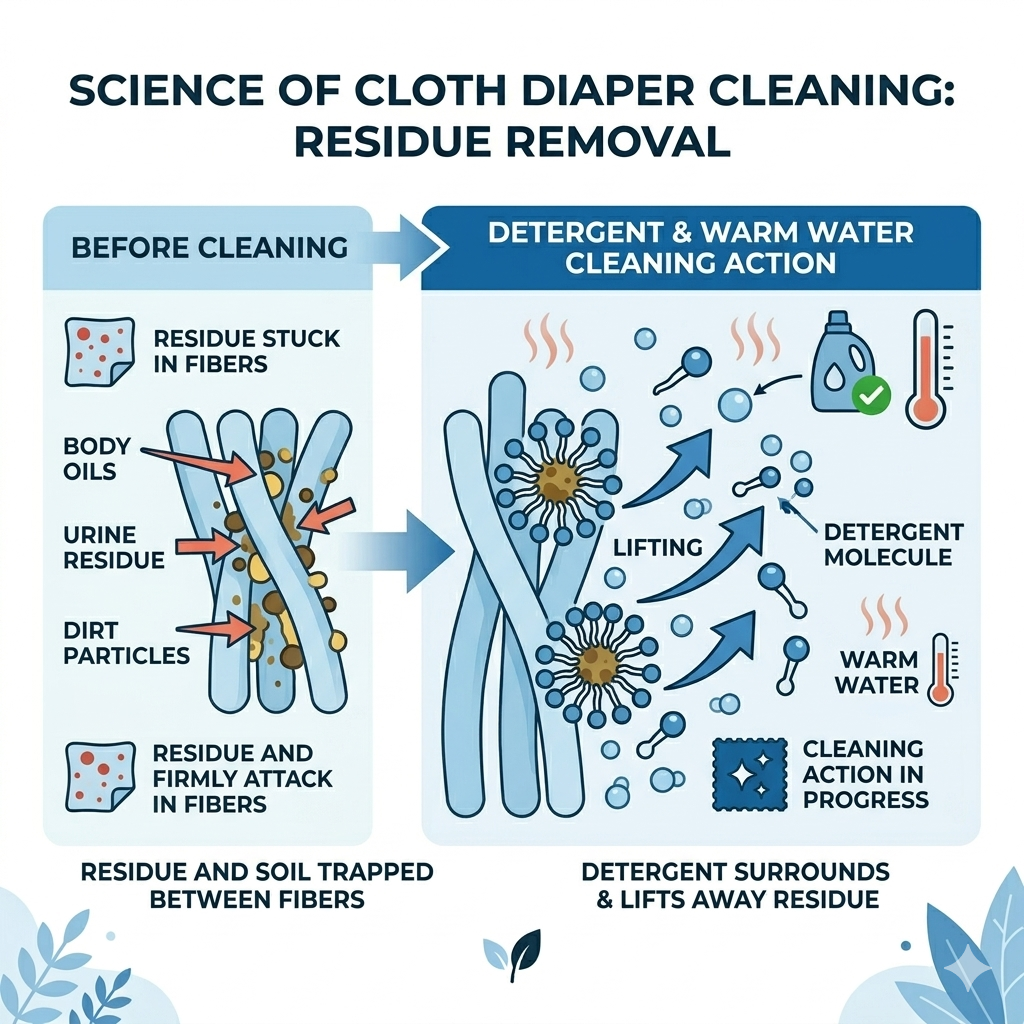
For most everyday cloth diaper washing — baby diapers, big kid daytime use, light adult incontinence — warm water with the right detergent dose and a properly loaded drum cleans diapers reliably wash after wash, with no need for hot water unless something specific goes wrong.
Does washer type affect water temperature?
Yes — and this surprises people. The "warm" or "hot" setting on your machine doesn't always deliver the temperature you'd expect.
HE machines blend hot and cold to hit a target
High-efficiency washers (front-loaders and HE top-loaders) use less water and often blend hot and cold supply lines to reach a preset target temperature. The actual water in the drum may be cooler than the dial setting suggests, especially if your hot water heater is set on the lower side or if the cold supply is very cold in winter.
If you're not sure your HE machine is reaching warm temperatures, the practical workaround is to select the longest, hottest cycle (usually Heavy Duty, Whites, or Power Wash on Hot) and turn off any "auto" or "sensor" features that might cool the wash. Adding a small amount of small laundry items to bulk up the load also helps the machine reach proper agitation, which matters more than temperature alone.
Standard top-loaders pull straight from the supply
Older standard machines pull water directly from the hot and cold supply lines. "Warm" usually means a 50/50 mix; "hot" means straight hot supply. The actual temperature depends entirely on what your hot water heater is set to. Most household water heaters are set between 120 and 140°F — which means a "hot" wash on a standard machine could exceed the 130°F ceiling. If your water heater runs hot, set the machine to warm instead, or turn the heater down to 120°F.
For full machine-by-machine wash settings, see the how to wash cloth diapers guide.
Do you need hot water to kill bacteria?
No — and this is one of the most persistent misconceptions about cloth diapers.
Hot water doesn't reliably "kill" bacteria the way most people imagine. To actually sanitize through heat alone, water needs to stay above about 160°F for an extended time, which is well above what cloth diapers can tolerate. What hot water does for cloth diaper washing is help detergent dissolve oils and lift residues away — the same job warm water does, slightly faster.
Bacterial removal in routine cloth diaper washing comes from three things working together:
- Detergent surfactants physically lift bacteria off the fabric
- Agitation works them out of the fibers
- The rinse cycle carries them away in the wash water
The bacteria don't have to die in the drum — they just have to leave it. A well-run wash routine at warm temperature does this reliably.
When you genuinely need to kill bacteria — severe ammonia, illness in the household, used diapers from another family — the answer is a chemical sanitize step, not maxing out the temperature. See how to sanitize cloth diapers without bleach.
Common questions
Do cloth diapers need to be washed in hot water?
Is warm water enough for cloth diapers?
What's the maximum safe temperature for cloth diapers?
Can you wash cloth diapers in cold water?
Why are my diapers still smelly after washing on hot?
Does washing on hot kill germs in cloth diapers?
My HE machine has a "warm" setting but the water feels cold — what's happening?
Is hot water needed for adult cloth diapers or big kid bedwetting diapers?
Can hot water damage cloth diapers?
Related guides
Not sure what temperature your machine is actually delivering, or whether you should be running hot for a specific situation? Contact us with details about your machine, water type, and what you're trying to solve, and we'll help you dial in the right setting.