
Our family is on vacation Jun 19–27. Order by Jun 18 at 11:30 AM PST to ship before we leave. Orders placed while we're away ship starting Jun 29.
On Sale!
Save 14%

Disana

Disana Wool Diaper Cover for Babies — 100% Organic Merino Wool, Double-Knit, Made in Germany

Retail
Was $36.99
Now $31.99 - $36.99
(You save )
(62 reviews) Write a Review
Shipping:
Calculated at Checkout

Description

Wool Diaper Cover · Made by Disana · 100% Organic Merino

The natural-fiber cover that breathes with your baby

A double-knit organic merino wool diaper cover from Disana, made in Germany. Breathable, naturally temperature-regulating, and water-resistant when lanolized — a genuine natural-fiber alternative to PUL for parents building an all-natural cloth diaper system.

Wool is water-resistant, not waterproof
Wool repels moisture through a natural wax in the fibers called lanolin, which is replenished periodically through a simple process called lanolizing. This is a completely different mechanism from PUL covers, which use a laminated waterproof barrier — and it's what makes wool so breathable.

How a wool cover actually works

Wool covers work on a completely different principle from PUL. Understanding the mechanism makes the whole system — including the lanolizing routine — make sense.

01
Wool repels moisture through lanolin
Lanolin is a natural wax found in wool fibers. When replenished through lanolizing, it coats the wool and makes it water-repellent. This is how wool covers stay leak-resistant — through a natural property of the fiber itself rather than a synthetic barrier.
02
Wool absorbs and neutralizes urine
Merino wool fibers can absorb up to 30% of their weight in moisture before feeling damp. When urine binds with lanolin in the wool, the ammonia is naturally neutralized — which is why wool covers don't smell between uses and don't need laundering after every change.
03
Wool breathes, even when damp
Unlike PUL, which traps heat and moisture against the skin, wool allows air to circulate. The skin underneath stays cooler and drier — a meaningful difference for overnight use, warm climates, and babies with sensitive skin.
04
Wool regulates temperature
Merino wool keeps babies warm in cool weather and cool in warm weather — a natural characteristic of the fiber. Damp wool stays close to body temperature, so overnight wetness doesn't result in a cold or clammy diaper.

When a wool cover is the right choice

Parents building an all-natural cloth diaper system
If you're cloth diapering with natural-fiber diapers underneath — organic cotton fitted diapers, hemp-cotton fitted diapers, prefolds, or flats — a wool cover is the natural-fiber counterpart to a PUL shell. No synthetic materials anywhere in the system.
Overnight cloth diapering
Wool's high absorbency combined with its breathability makes it particularly well-suited for 10–12 hour overnight stretches. Paired with a heavy-absorbency fitted diaper, it handles overnight wetting without trapping moisture or heat against the skin.
Babies with sensitive or rash-prone skin
Wool's breathability keeps the skin cooler and drier than PUL. For babies who develop rashes in warm, enclosed diaper environments, a wool cover can meaningfully change the skin environment inside the diaper.
Warm climates and warmer months
PUL can feel hot and sweaty in warm weather. Wool stays cooler because air can actually circulate through it. Many parents use Disana wool covers alone as pajama shorts on summer nights over the diaper.

This is a cover — you pair it with an absorbent diaper

The wool cover contains moisture; an absorbent diaper underneath does the actual absorbing. Together they form the complete cloth diaper system. Here's what works well with this cover.

EcoAble Hemp Night Fitted Diaper
A high-absorbency hemp-cotton fitted diaper designed for overnight use. Pairs especially well with this wool cover for a natural-fiber overnight setup — both the fitted diaper and the cover are natural fibers throughout. See the All-Natural Hemp Night Fitted or the Stay-Dry Hemp Night Fitted.
Disana Organic Cotton Fitted Diaper with Ties
A 100% organic cotton fitted diaper that wraps and ties on — no snaps, no hook-and-loop, no elastics. Disana's own cotton fitted pairs naturally with their wool cover for a complete Disana natural-fiber system. See the Disana Fitted Cloth Diaper with Ties on its own, or the Fitted + Booster Pads Set for added absorbency.
Prefolds and flat diapers
A prefold is a folded cloth rectangle; a flat is a single-layer cloth folded to fit. Both are traditional cloth diapering methods that work well under a wool cover. Inexpensive, absorbent, and fully natural fiber when made from cotton.
Add a brushed cotton booster for extra absorbency
For heavier wetting or longer overnight stretches, the Disana Brushed Cotton Booster Pads tuck inside your fitted diaper for a soft, natural-fiber absorbency boost that pairs well with any of the options above.

Using your wool cover, step by step

If you've never used a wool cover before, this walks you through the full setup — from preparing the cover to daily use.

1
Lanolize before first use
Wash the cover in cool water with wool-specific detergent, then lanolize. This builds the moisture-repellent coating that makes the cover work. About 15 minutes of active time, and it only needs to be done every few weeks — not daily.
2
Put an absorbent diaper on your baby
A wool cover is not a complete diaper on its own — it goes over an absorbent diaper underneath. This can be a fitted diaper, a prefold, or a flat. The absorbent layer does the absorbing; the wool cover does the containing.
3
Pull the wool cover over the diaper
The Disana cover is a pull-on design — no snaps, no hook-and-loop. The knit is stretchy, so it pulls on like shorts. Make sure the absorbent diaper underneath is fully tucked inside the leg and waist openings — any exposed absorbent fabric will wick moisture outward.
4
At change time: assess the cover
Remove the absorbent diaper and check the cover. If it's clean and dry, reuse it immediately with a fresh diaper. If it's slightly damp, turn it inside out and hang it to air briefly — the lanolin neutralizes the urine and the cover is ready to reuse. Most parents get many uses out of a cover between washes.
5
Spot clean small messes
For small marks, spot clean with cool water and a wool wash bar. A full hand wash is only needed every 1–4 weeks depending on use — unlike PUL covers, wool doesn't need frequent washing because of its natural antibacterial properties.
6
Hand wash and re-lanolize periodically
When it's time for a full wash: hand wash in cool water with wool detergent, gently pressing — no wringing or agitating. Rinse thoroughly. Re-lanolize, roll in a towel to remove excess water, then lay flat to dry. Never machine wash, never tumble dry — wool felts and shrinks permanently under agitation and heat.
Full lanolizing guide

The full step-by-step process for washing and lanolizing wool covers is available here: How to Wash and Lanolize Wool Cover. It sounds more complicated than it is — most parents get comfortable with the process after doing it once.

What makes this Disana cover distinctive

01
100% GOTS-certified organic merino
Certified organic virgin merino wool throughout. GOTS certification covers the full supply chain — from the farm where the wool is grown to the factory where the cover is knit. No synthetic fibers, no non-organic blends.
02
Double-knit construction
Two knitted layers of merino wool rather than one. The double-knit adds leak protection where it matters most and delivers reliable overnight performance when properly lanolized.
03
Stretchy pull-on fit
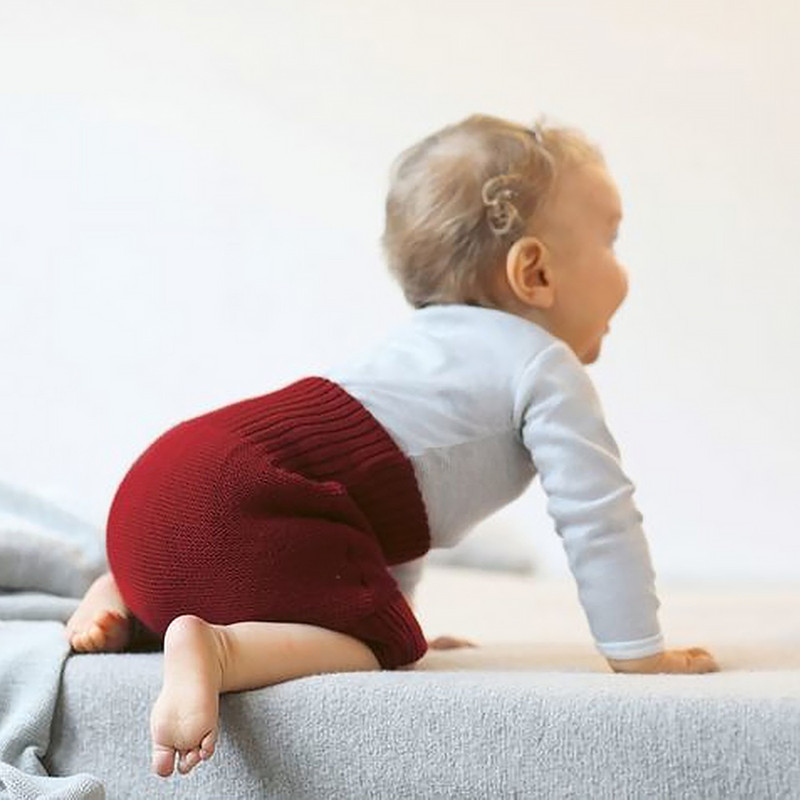
The knit is impressively stretchy, which lets it fit over bulky overnight fitted diapers or slim daytime prefolds equally well. High waistband covers your baby's midsection; generous leg openings reduce the red marks sometimes left by tighter covers.
04
Made in Germany by Disana
Disana has been producing organic wool baby clothing in Germany for two generations — long before "organic" became mainstream. Known for quality, durability, and covers that last long enough to be passed between siblings.

What it's made from

100% Organic Virgin Merino Wool

The entire cover — double-knit construction · GOTS certified · Made in Germany

Merino wool is finer than standard wool, which is why it's soft enough to wear directly against a baby's skin without any of the prickly feel associated with coarser wool. Merino fibers also have excellent moisture-regulating properties — they can absorb up to 30% of their weight in moisture before feeling damp.

Virgin wool means the wool has not been recycled or reprocessed. The fibers are long and intact, which improves durability and absorbency.

Organic certification (GOTS) means the wool comes from farms that meet the Global Organic Textile Standard — covering animal welfare, farming practices, and the processing and dyeing stages of the finished fabric.

Double-knit construction provides two layers of wool rather than one, which is what gives this cover its reliable overnight leak performance.

Six sizes from newborn through age 6

Disana uses European sizing based on a child's height in centimeters. Six sizes are available, covering the full cloth diapering age range.

EU Size Age Range Approx. Height
50-56 0–3 months 50–56 cm (20–22 in)
62-68 3–6 months 62–68 cm (24–27 in)
74-80 6–12 months 74–80 cm (29–31 in)
86-92 12–24 months 86–92 cm (34–36 in)
98-104 3–4 years 98–104 cm (39–41 in)
110-116 5–6 years 110–116 cm (43–46 in)
Wool shrinks with use — size up at the upper edge
Wool shrinks slightly with use and washing — this is normal and expected with natural fibers. If your baby is at the upper end of a size range or between sizes, size up. Disana recently updated its sizing guidance: EU 98–104 is now recommended for 3–4 years (previously 2–3), and EU 110–116 for 5–6 years (previously 3–4). The covers themselves haven't changed — only the age recommendations.

Is this the right cover for you?

A straight look at what a wool cover does well, what to know going in, and what parents new to wool should understand before buying.

Works well for
  • Parents intentionally building an all-natural cloth diaper system with no synthetic materials
  • Overnight cloth diapering — paired with a hemp-cotton or organic cotton fitted diaper, this cover handles 10–12 hour stretches reliably
  • Babies with rash-prone skin who benefit from the breathability wool provides
  • Warm climates where PUL feels hot — wool breathes and keeps skin cooler
  • Cooler climates and overnight use where wool's temperature regulation is an asset
  • Parents who want a cover that rarely needs washing — wool's natural antibacterial properties mean weekly washes rather than after every few uses
Worth knowing
  • Wool is water-resistant, not waterproof. The cover needs to be lanolized before first use and periodically after. This isn't a downside — it's how wool works — but it is different from the plug-and-play routine of PUL
  • If poop gets on the cover rather than being contained by the diaper underneath, the cover needs to be hand washed before re-use
  • Wool covers require wool-specific detergent and hand washing. Regular laundry detergent, hot water, or machine washing will felt and shrink the cover permanently
  • The double-knit construction is a genuine premium product — expect higher upfront cost than a PUL cover, offset by the fact that wool covers last for years and often get passed between children
For parents new to wool
  • The first time you lanolize a cover is the most intimidating step. In practice it takes about 15 minutes, and it's forgiving of mistakes. The full guide walks through the process
  • If you don't already have an absorbent diaper to pair with this cover, natural-fiber options include the EcoAble Hemp Night Fitted Diaper or the Disana Cotton Fitted Diaper with Ties
  • Wool has a slight natural smell when new — this fades with washing and is not urine odor
  • If you prefer a simpler cover with less learning curve, the EcoAble Heavy Duty PUL Cover is machine washable and fills many of the same jobs — PUL is a legitimate choice, not a lesser one

Washing and caring for your wool cover

Hand wash only Cool water Wool-specific detergent Lay flat to dry Lanolize periodically Never machine wash or tumble dry

Hand wash in cool water with a wool-specific detergent — gentle pressing only, never wringing or agitating. Rinse thoroughly. Lanolize when the cover is soiled or no longer repels moisture — not after every wash. Roll the cover in a clean towel to remove excess water, then lay flat to dry. Never machine wash, never tumble dry, never use regular detergent or fabric softener — any of these will felt and shrink the wool permanently. When properly cared for, wool covers last for years and can often be passed between children. Full instructions: How to Wash and Lanolize Wool Cover.

What parents ask most

Wool covers raise questions that PUL covers don't. Here are the ones that come up most.

Wool vs PUL — which should I actually choose?
Both work well when used correctly — they just work differently. PUL is synthetic, machine washable, fast-drying, and simpler to use. Wool is natural fiber, more breathable, better temperature-regulating, gentler on sensitive skin, and needs periodic hand washing and lanolizing. Choose wool if you're intentionally building a natural-fiber system, have a baby with sensitive skin, or live somewhere warm. Choose PUL if you want the simpler routine. There's no universally right answer — both are legitimate.
Do I really have to lanolize it?
Yes, before first use and periodically afterward. Disana's documentation says lanolizing isn't strictly required, but in practice most parents find they need to lanolize for reliable overnight leak protection — especially with a heavy wetter. Lanolizing takes about 15 minutes of active time and only needs to be done every few weeks, not daily. The full guide is linked in the care section.
How often do I actually have to wash the wool cover?
Much less often than a PUL cover. Wool's natural antibacterial properties and lanolin's ability to neutralize urine mean the cover doesn't need washing after every use. Most parents wash wool covers every 1–4 weeks depending on use, or immediately if the cover gets soiled by poop. Between uses, air dry any dampness and the cover is ready to reuse. This is a real practical advantage over PUL.
What absorbent diaper should I pair this with?
Wool covers need an absorbent diaper underneath. For overnight, the EcoAble Hemp Night Fitted Diaper is a popular pairing — hemp-cotton absorbs a lot of moisture and holds it deep in the fibers. For an all-Disana setup, the Disana Cotton Fitted Diaper with Ties is made specifically to pair with this cover — both are Disana, both are natural fiber. Prefolds and flat diapers also work well.
Can I use this as shorts in warm weather?
Yes — this is actually a popular use. The cover is essentially a pull-on pair of knitted wool shorts, and many parents use it as pajama shorts or summer shorts over the diaper. Wool breathes well, regulates temperature, and is comfortable in heat. Just remember that it still needs an absorbent diaper underneath to function.
Why does Disana recommend a different age for the larger sizes now?
Disana updated its sizing guidance based on feedback about how the covers actually fit over time. The EU 98–104 size is now recommended for 3–4 year olds rather than 2–3; the EU 110–116 is now recommended for 5–6 year olds rather than 3–4. The covers themselves haven't changed — only the age recommendations. Sizing is still based on the child's height in centimeters, which is the most reliable measurement.
Does the cover smell like urine after use?
No — and this surprises many parents. When urine binds with lanolin in the wool, the ammonia is neutralized naturally. This is the same property that allows wool to be worn many times between washes without developing odor. If the cover does develop a smell, that's a sign it needs a full wash and re-lanolizing — not a sign that wool "doesn't work."

All EcoAble orders ship in plain, unmarked packaging.

Additional Details

62 Reviews

  • 5
    Highly recommended for overnight cloth diapering

    Published by Stephanie on Feb 4th 2016

    I love this wool diaper cover. It works great over my pocket diapers. I originally ordered the smaller size for my 8 month old but her legs are a little chunky, so I exchanged it for the larger 12-24 month size. It fits great with lots of room to grow but still keeps the moisture in overnight. No leaks since I started using this product (after proper lanolin treatment). Highly recommended!

  • 4
    Great overnight diaper cover, but needs breaking in

    Published by RBB on Jan 22nd 2016

    Pretty good nighttime diaper solution. This cover works well after MUCH breaking in - it took nearly a month of use, hand felting, and lanolizing 3-4 times before wetness stopped soaking through at night. The performance keeps improving with more use. I'd highly recommend wool diaper covers if you're having trouble with diaper rash. I use this cover whenever I notice her bottom getting red and it almost always clears right up! I was about ready to give up on cloth diapers until I found wool. My baby girl is 16 pounds and 5.5 months old in the 6-12M size with room to spare.

  • 5
    Maximum comfort and spill protection

    Published by Melissa Wilkins on Sep 29th 2015

    Bought these for my 16lb 4 month old in the 6-12 month size, a little large on purpose. They fit in the sense that they are snug enough to stay on and provide leak coverage, yet they will stretch softly to accommodate her growth. They are an excellent combo over organic cotton and hemp cloth diapers. They are so soft and cozy I try to keep her in them as much as possible - any redness from disposables just disappears while wearing them. It's been a week without washing, any heavy wetting requires only a few hours to dry in my dry climate, and there is no odor.

  • 5
    Magical Wool Cover

    Published by Amy Fitz on Aug 10th 2015

    I love this wool cover! It does need to be lanolized thoroughly a good 2-3 times before it will be leak-proof. I used a cap-full of Eucalan wool wash and about an inch of Lansinoh lanolin the second time I lanolized and this helped significantly. I know most people would think this is over-kill on the lanolin, but it worked great for me, and has kept it great ever since. I was a little intimidated at first to start using the cover because of the whole wool-maintenance routine. I wish I would have started sooner! This cover fit my little one great basically since birth (at 7lb 5oz) and is still fitting great at 4 months. It does run a bit small, and is a little tighter than I'd like on these chunky thighs at 4 months, but it still is far more breathable, comfortable, and EASIER to use than all my various covers, pockets, and all-in-ones. This guy will have red marks no matter what type of diaper, with the exception of this wonderful wool cover. I recently started using this overnight with an unbleached organic prefold underneath. I am still amazed when I take off a sopping wet diaper in the middle of the night and again first thing in the morning, and not only are there NO leaks (the cover will feel a little damp, but no moisture leaks through) but his skin looks amazingly smooth, not a mark in sight. And his skin is DRY as well. Soaking diaper, dry skin. This is the power of wool. Also, I live where summers are always over 100 degrees, and I don't hesitate to put on this cover in this heat. Wool is so breathable that it is still the absolute best option for keeping baby dry, happy, and red-mark free. I am now converting my entire stash to wool and flats. This cover is much cheaper than many others and works wonderfully. If you have been hesitant to try it, stop debating and take the plunge - you'll wish you had sooner! One note: even though I washed this gingerly, the cover did start felting after the 3rd wash. This doesn't matter to me since I'm more concerned with keeping baby dry than with it looking pristine. The size 62/68 (3-6 months) fit my newborn and still fits at 4 months.

  • 5
    So soft!

    Published by Ricki P on Jun 20th 2015

    I love this cover! It was so soft right out of the package. After lanolizing and air drying, I put it on my baby over a prefold overnight. He slept all night in it. In the morning the diaper was very wet but the cover was dry. I've used it 3 nights in a row with no leaking whatsoever and no smell. I like that the cover has a high waist band and leg cuffs for more protection. Unlike PUL covers, it leaves no creases or red marks on baby's sensitive skin, and since it's wool and breathes, he doesn't get sweaty. Did I mention it's SO SOFT?! Highly recommend.